Aeration is one of the most overlooked lawn services — yet one of the most important.
Many homeowners focus on mowing and watering but ignore what’s happening below the surface.
If your lawn isn’t performing the way it should, the issue may not be visible. It may be compacted soil.
Here are the clearest signs your lawn needs aeration — and why correcting it early protects long-term turf health.
If walking across your lawn feels firm or dense instead of slightly springy, soil compaction is likely present.
Compacted soil:
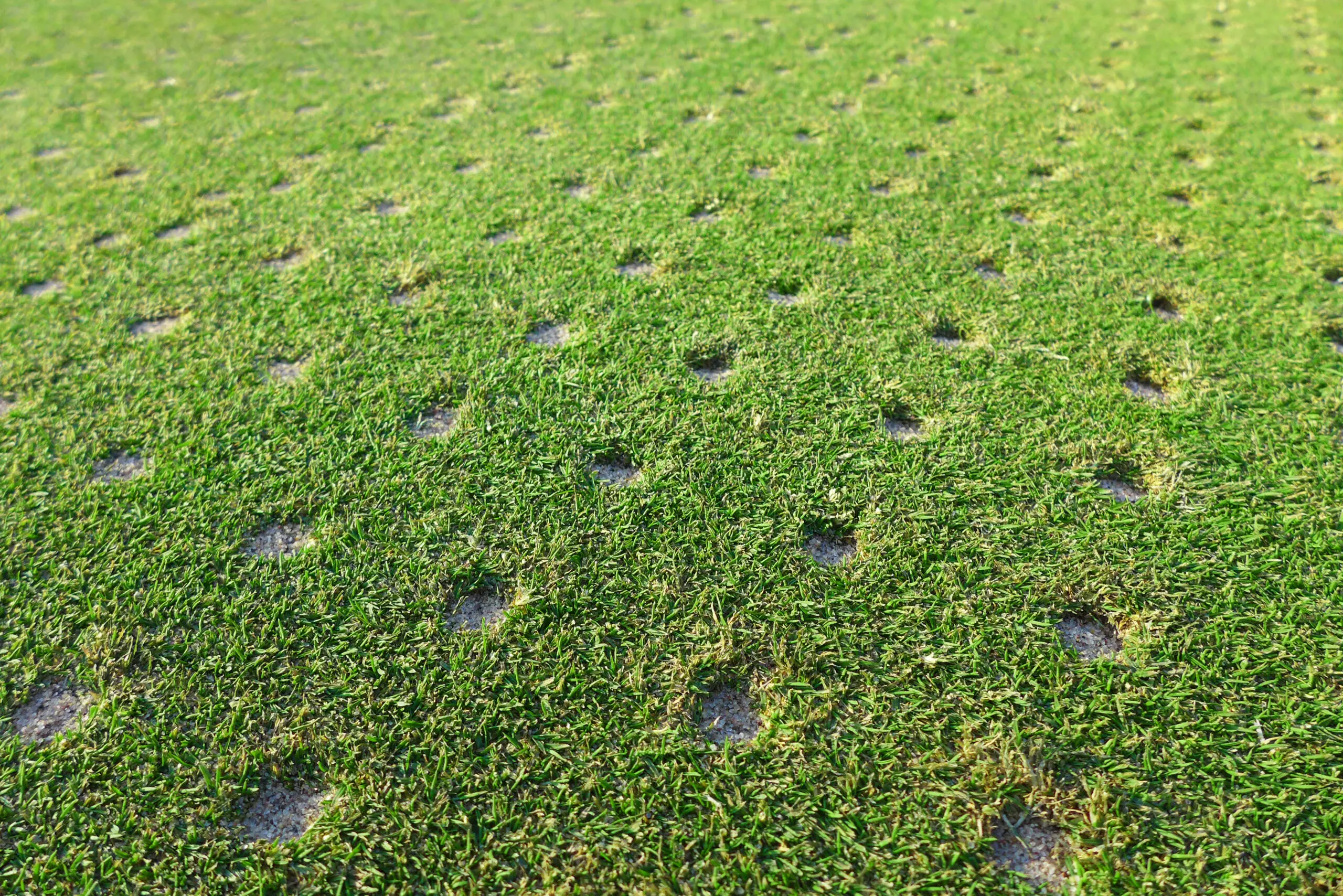
Core aeration service removes small plugs of soil to relieve pressure and restore airflow beneath the surface.
Healthy soil absorbs water evenly.
If you notice standing water or runoff shortly after watering, the ground may be too compact to allow penetration.
Poor absorption leads to:
Lawn aeration improves water infiltration and restores balance.
If you’re watering consistently but the lawn still appears weak or patchy, the issue may not be moisture — it may be root restriction.
Compacted soil keeps roots shallow.
Shallow roots struggle during heat, drought, and stress.
Aeration promotes deeper rooting, resulting in thicker and more resilient turf.
Some areas may look healthy while others remain thin or stressed.
Inconsistent turf density often reflects inconsistent soil conditions.
Aeration helps equalize the environment beneath the lawn, leading to more uniform growth and improved overall appearance.
Areas near walkways, patios, and play zones compact faster due to repeated pressure.
These sections often:
Aeration relieves compression and helps turf rebound more effectively in heavy-use zones.
If the lawn feels slightly spongy but also struggles with water absorption, you may have both thatch buildup and compaction below.
Thatch traps moisture near the surface, while compacted soil prevents deep absorption.
When dethatching is paired with aeration, airflow improves and roots reconnect with healthy soil.
Heat stress exposes weak root systems quickly.
Compacted soil limits how deep roots can grow, making grass more vulnerable during hot seasons.
Lawn aeration benefits include:
When soil structure improves, turf becomes more stable and resilient.
Aeration is not a cosmetic service.
It addresses the foundation of your lawn.
Without relieving compaction:
Surface treatments alone cannot fix soil restriction.
Structure must be restored from below.
You should strongly consider aeration if:
Addressing compaction early prevents long-term damage and reduces the need for major repairs later.
Healthy lawns begin with healthy soil.
If you’re seeing multiple signs your lawn needs aeration, the best time to correct the problem is before thinning, browning, or drainage issues escalate.
Restore the foundation — and the lawn improves naturally.

If your lawn shows signs of compacted soil or uneven performance, schedule your free consultation and let our team determine whether professional core aeration service is the right next step for your yard.