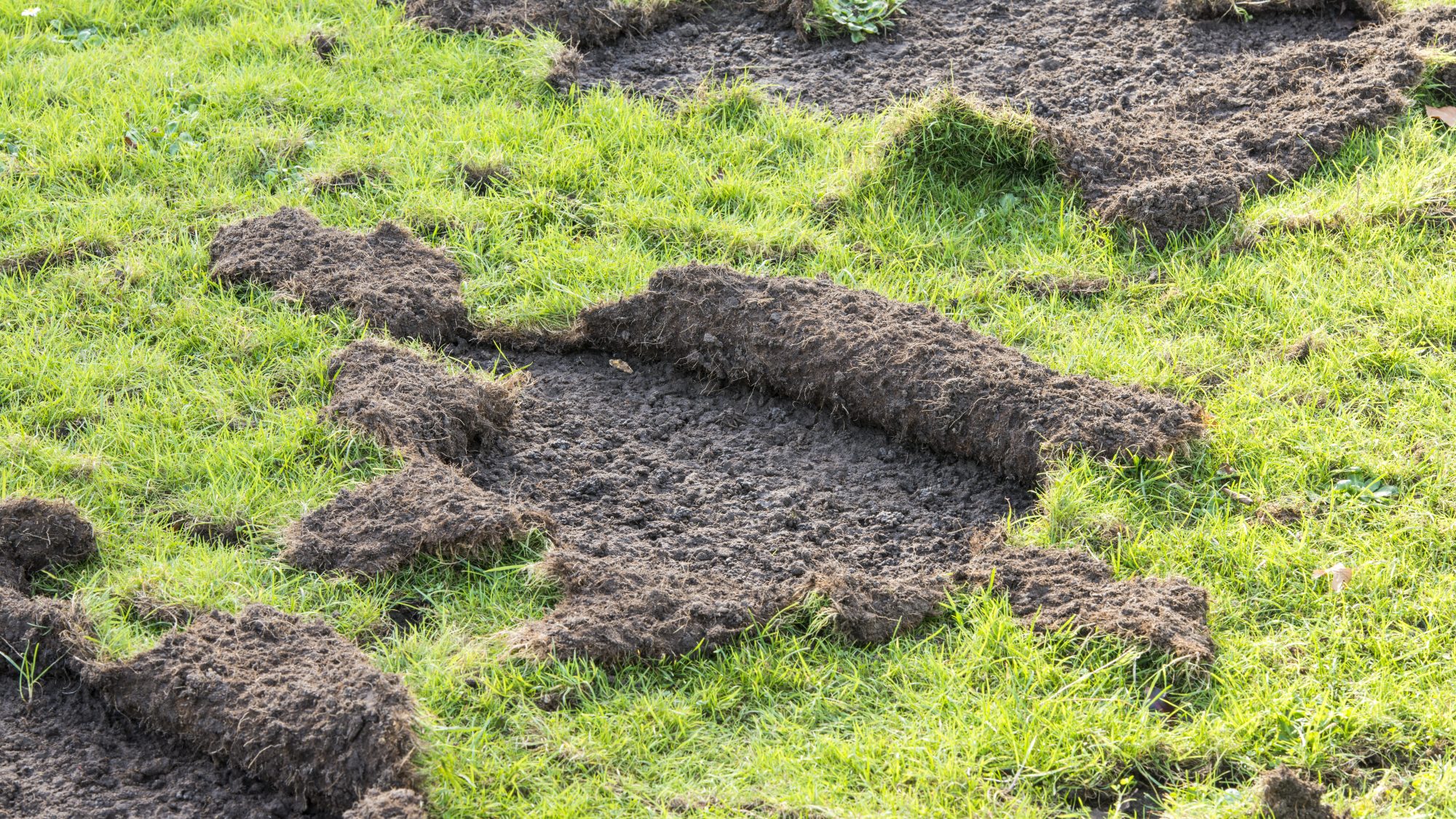
Construction projects can completely change a yard.
Whether it’s a new fence, patio, driveway, home addition, or utility work — your lawn often pays the price.
Heavy equipment.
Foot traffic.
Soil displacement.
Grade changes.
If you’re searching how to fix a lawn after construction damage, the key is understanding that the damage is rarely just surface-level.
Construction impacts soil structure first — and turf health second.
Here’s how to restore it properly.
Heavy machinery compresses soil far beyond normal foot traffic.
Compacted soil:
If you notice hard, dense ground where work occurred, compaction is likely the main issue.
Lawn aeration is often the first step in recovery.
Construction frequently shifts soil elevation.
You may see:
These grade changes disrupt drainage patterns.
Yard leveling restores a smooth, balanced surface and corrects slope inconsistencies.
Without leveling, drainage problems will continue.
During construction, topsoil is often removed, buried, or displaced.
Topsoil contains nutrients and organic material critical for turf growth.
Without it, grass struggles to establish.
Top dressing or soil redistribution may be required before reseeding or sod installation.
Heavy equipment crushes existing root systems.
Even if grass appears intact at first, weakened roots lead to thinning weeks later.
Damaged sections may require selective sod replacement once soil is corrected.
Immediately after construction, the lawn may look messy but stable.
Weeks later, problems appear:
That’s because soil imbalance reveals itself slowly.
Correcting structural issues early prevents full restoration later.
Aeration relieves pressure and restores breathable soil.
This allows roots to grow again.
Leveling redistributes soil evenly and restores proper slope.
Balanced grading improves drainage and prevents pooling.
If topsoil was displaced, top dressing helps rebuild a healthy growing base.
Strong soil supports strong turf.
Once structure is corrected:
Replacement should only happen after foundation issues are resolved.
Many homeowners attempt:
But without fixing compaction and grading, new grass struggles the same way old turf did.
Structure must come first.
When construction damage is corrected properly, you regain:
The lawn becomes stronger than before.
Fixing construction damage isn’t about hiding disruption.
It’s about resetting soil conditions and rebuilding from the ground up.
When soil breathes and grading balances, turf thrives again.

If your yard was damaged during construction, schedule your free consultation and let our team evaluate compaction, grading, and restoration options to rebuild your lawn properly.