Heavy rain can expose weaknesses in your yard fast.
What looked fine last week may now have:
If you’re wondering how to fix a lawn after heavy rain, the solution depends on what the rain revealed.
Storms don’t create most problems — they expose existing structural issues.
Here’s how to address them properly.
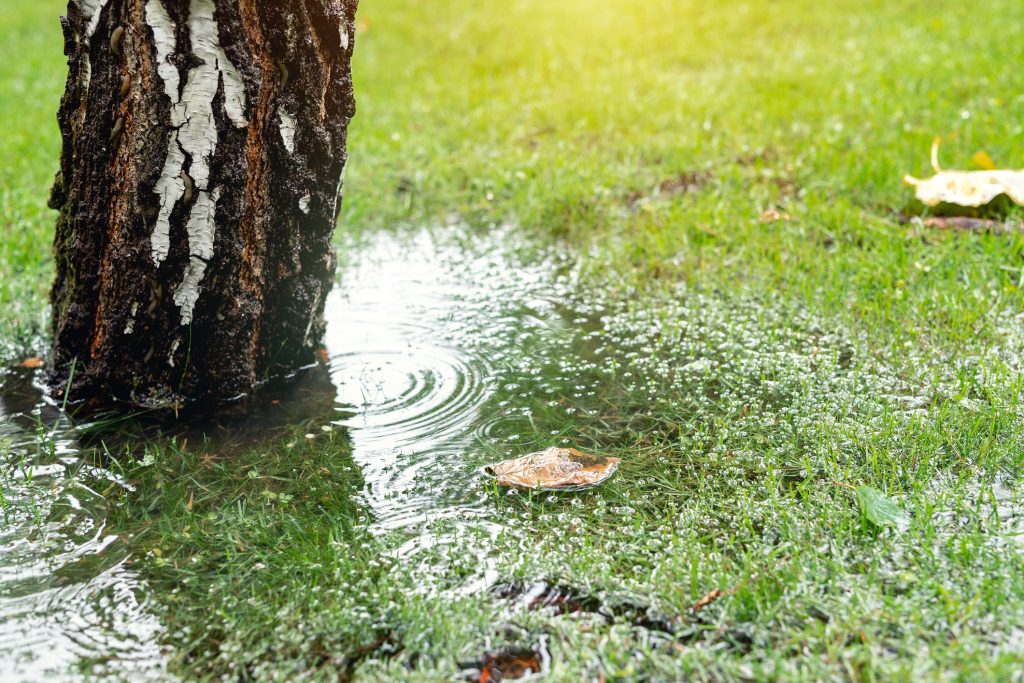
After heavy rain, pay attention to where water collects.
Standing water indicates:
Water pooling in yard areas suffocates roots and leads to thinning turf.
Yard leveling and drainage correction restore balanced water flow.
Heavy rain can wash away topsoil, especially on slopes or uneven areas.
Signs of erosion include:
Yard erosion repair may require soil redistribution and grading correction to stabilize the surface.
Ignoring erosion allows it to worsen with every storm.
If the ground feels hard after rain, water may not be penetrating deeply.
Compacted soil causes runoff instead of absorption.
Lawn aeration helps relieve compaction and improve drainage performance.
Better soil structure reduces future storm damage.
Rain can exaggerate dips and low spots.
Small irregularities become larger stress zones after repeated storms.
Top dressing can help smooth shallow dips.
More severe areas may require professional yard leveling.
A smooth surface improves both drainage and mowing consistency.
Storms often leave:
Seasonal lawn cleanup restores organization and prevents debris from suffocating turf.
Clearing buildup allows grass to recover faster.
If sections of grass are severely weakened or uprooted, targeted lawn restoration or selective sod installation may be necessary.
But before replacing turf, structural issues must be corrected.
Replacing grass without fixing drainage leads to repeat failure.
Storm damage usually highlights:
Rain doesn’t destroy healthy lawns.
It stresses weak foundations.
Correcting structure protects against future damage.
To reduce the impact of future storms:
Proactive correction prevents reactive repairs.
If your lawn looks worse after heavy rain, don’t just treat the visible damage.
Fix what the storm revealed.
Balanced drainage and stable soil protect turf long-term.

If heavy rain exposed drainage or uneven ground in your yard, schedule your free consultation and let our team evaluate the best solution to restore stability and protect your lawn.