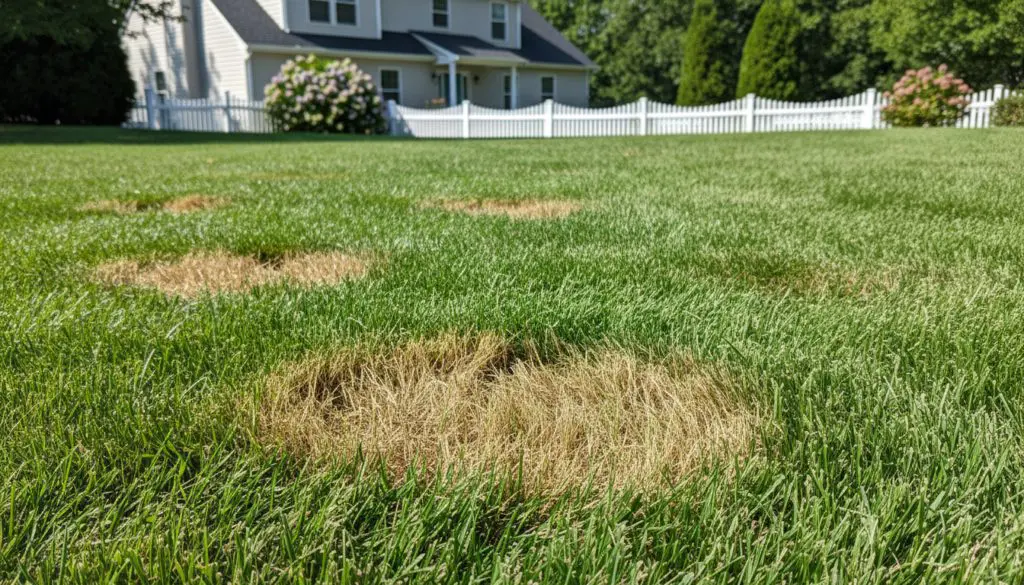
Sometimes a lawn isn’t dead.
It just looks… tired.
The color isn’t vibrant.
Growth feels slow.
The surface looks uneven.
It doesn’t have that full, healthy appearance anymore.
If your lawn looks worn out, it’s usually not one big issue.
It’s the result of small structural problems building up over time.
Here’s how to fix a tired lawn the right way.
Over time, soil becomes compacted from:
Compacted soil limits:
When roots can’t expand, grass loses strength and density.
Aeration restores airflow and gives the lawn room to recover.
Often, this is the first step in bringing a tired lawn back to life.
If the lawn feels soft or uneven, excess thatch may be trapping moisture and blocking nutrients.
Thatch buildup can:
Removing that barrier allows the turf to reconnect with healthy soil.
Better contact = better recovery.
Grass depends entirely on what’s underneath it.
If the soil lacks structure or organic material, the lawn may struggle to maintain color and thickness.
Top dressing introduces improved soil composition and supports stronger root systems.
Stronger roots create stronger blades.
Low spots and minor grading issues can cause:
Leveling improves both performance and appearance.
A smooth lawn reflects light more evenly and simply looks healthier.
Inconsistent mowing is one of the fastest ways to make a lawn look worn.
Cutting too short stresses turf.
Skipping weeks weakens density.
Maintaining proper height on a consistent schedule helps grass recover and rebuild strength.
Consistency restores structure.
If parts of your lawn stay wet while others dry out quickly, the imbalance will show.
Over time, this creates fatigue in certain areas.
Correcting drainage protects roots and improves long-term stability.
Balanced moisture = balanced growth.
Many homeowners try:
But if the soil is stressed or compacted, surface treatments won’t create lasting improvement.
Restoring a tired lawn requires addressing the foundation first.
A healthy lawn should:
If yours feels worn out, it doesn’t mean it’s beyond repair.
It likely just needs structural attention.
Lawns don’t get tired randomly.
They decline gradually when soil, drainage, and maintenance fall out of balance.
Correct the structure — and vitality returns.

If your lawn looks tired or worn down, schedule your free consultation and let our team evaluate your soil, grading, and turf health to create a recovery plan that restores strength and consistency.