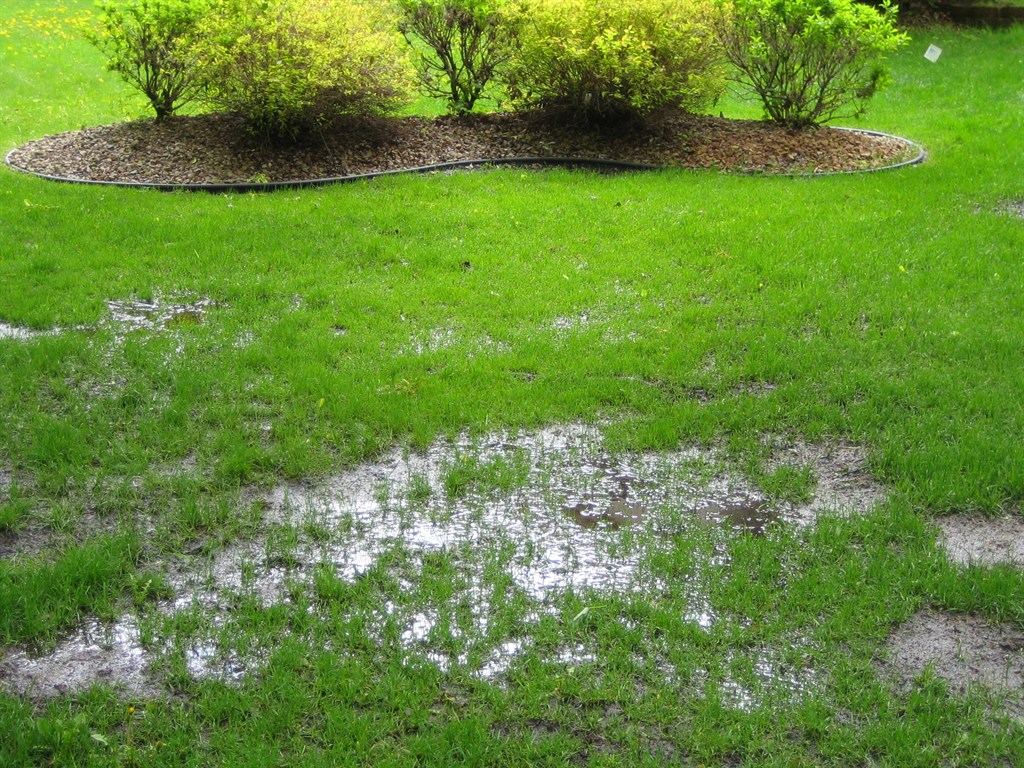
A healthy lawn should absorb rain and dry within a reasonable amount of time.
If your yard stays wet long after a storm — or even after routine watering — that’s not normal.
It’s structural.
If you’re searching how to fix a lawn that stays wet too long, the issue is rarely just “too much rain.”
It’s usually a combination of compaction, poor grading, and soil imbalance.
Here’s what’s really happening — and how to correct it properly.
Not all soil drains the same way.
When drainage imbalance exists, certain sections of your lawn may:
These signs point to underlying structural limitations.
Compacted soil prevents water from penetrating downward.
Instead of soaking into the ground, water remains near the surface.
Compaction often develops from:
Lawn aeration restores airflow and creates channels for water to move deeper into the soil profile.
Breathable soil drains more efficiently.
Even subtle depressions become noticeable after rainfall.
Low spots trap water.
Repeated oversaturation leads to:
Yard leveling redistributes soil and restores proper slope.
Balanced grading prevents water from collecting in isolated sections.
If your yard does not slope properly away from certain areas, water movement becomes restricted.
Improper grading may cause:
Leveling corrects minor grade imbalance without requiring major construction.
Thatch buildup can trap water above the soil line.
Instead of absorbing into the ground, moisture remains suspended in organic material.
Professional lawn thatching removes buildup and restores direct soil contact.
Proper soil contact improves drainage performance.
When lawns already struggle with drainage, additional watering compounds the issue.
Oversaturated soil:
Balanced irrigation only works when soil structure allows proper absorption.
If drainage issues go uncorrected, you may experience:
Moisture imbalance weakens lawns slowly — but consistently.
A structured solution may include:
Fixing structure restores proper water movement.
Surface drying alone is not a solution.
A properly functioning lawn should:
Balanced soil equals balanced moisture.
Balanced moisture equals stable turf.

If your lawn stays wet long after rain, schedule your free consultation and let our team evaluate whether compaction, grading, or soil imbalance is causing the issue.