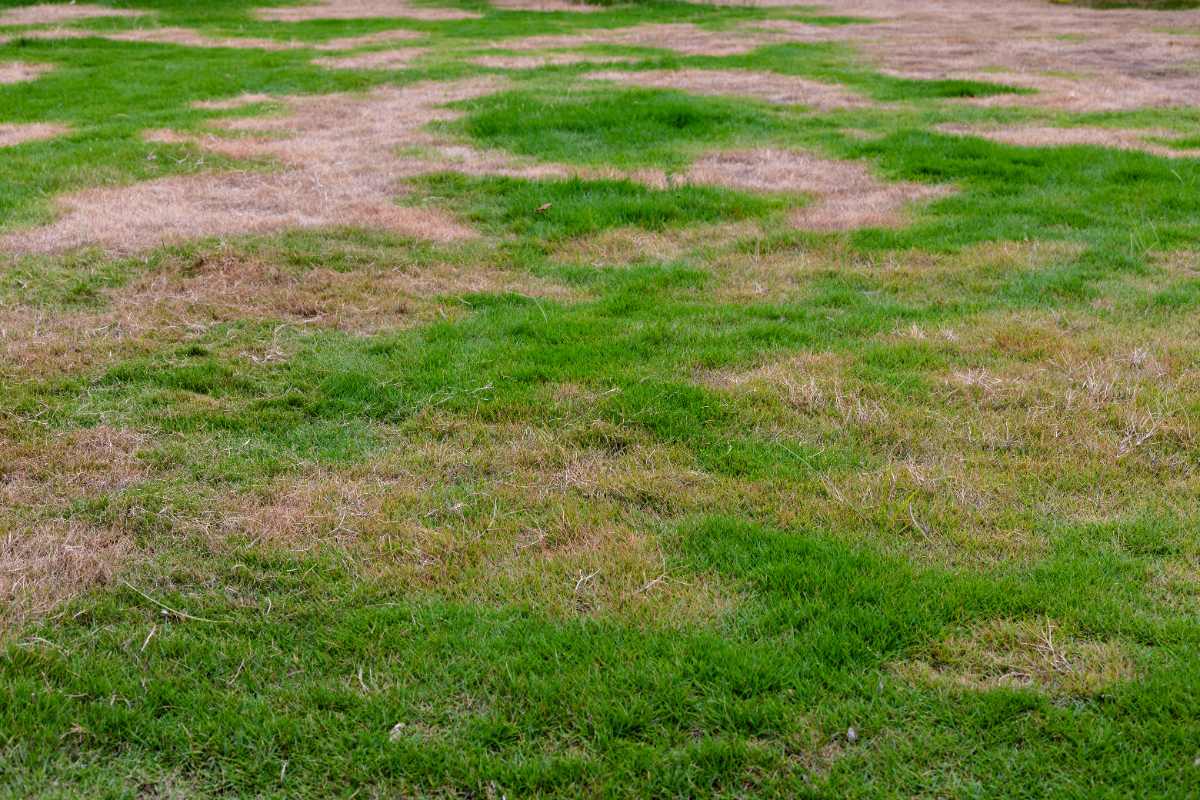
Few things are more frustrating than a lawn that refuses to grow evenly.
One section looks thick and healthy.
Another grows slowly.
Some areas stay darker.
Others thin out quickly.
If you’re searching how to fix a lawn that won’t grow evenly, the problem is almost never random.
Uneven growth is a symptom.
And the cause is almost always structural.
Let’s break down why lawns grow inconsistently — and how to restore balance properly.
Not all soil compacts evenly.
High-traffic areas, corners, or spots near walkways often become denser.
Compacted soil restricts:
When roots cannot grow deeply, turf in those areas grows slower and thinner.
Lawn aeration relieves compaction and restores uniform soil conditions.
Even soil supports even growth.
Water rarely distributes perfectly on uneven ground.
Low spots retain more moisture.
High spots dry faster.
This leads to:
Yard leveling corrects grading inconsistencies and improves moisture balance.
Balanced hydration produces balanced density.
Organic buildup doesn’t accumulate evenly.
Some sections may have thicker thatch layers than others.
Excess thatch blocks nutrients and moisture from reaching roots.
Professional lawn thatching removes buildup and restores consistent soil contact.
Uniform soil contact supports uniform performance.
Repeated mowing in the same direction can create lean and density imbalance.
Cutting too short in certain areas exaggerates unevenness.
Weekly lawn maintenance with structured patterns prevents stress zones.
Consistency corrects surface imbalance.
Even small dips and subtle grade changes influence growth speed.
Depressions retain moisture longer.
Raised areas experience more exposure.
Top dressing corrects shallow irregularities and smooths growth patterns.
For larger inconsistencies, leveling may be necessary.
When left uncorrected, uneven growth leads to:
Weak zones invite invasion.
Stronger areas dominate.
Without structural correction, imbalance compounds.
Correcting uneven lawn growth requires a structured approach:
Aeration is often the first corrective step.
Relieving compaction improves root depth and balances growth speed.
Identify where water pools or runs off too quickly.
Leveling may be required to redistribute soil and correct slope.
Dethatching improves nutrient penetration and strengthens weak zones.
Stable mowing height and schedule prevent additional stress.
Consistency supports uniform density.
Even growth comes from:
When foundation conditions align, surface appearance naturally improves.
Fixing uneven growth improves:
The lawn begins functioning as one connected system — not isolated sections.

If your lawn refuses to grow evenly, schedule your free consultation and let our team identify what’s causing the imbalance so you can restore uniform growth.