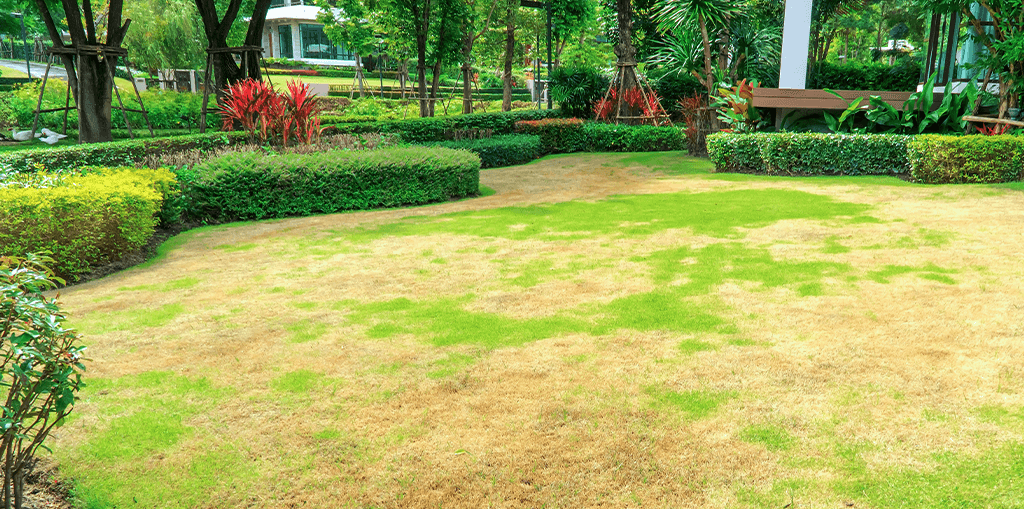
Shade can make a yard feel cooler and more comfortable.
But for grass, too much shade creates ongoing stress.
If you’re searching how to fix a lawn with too much shade, you’re likely dealing with:
Grass needs light to perform properly.
But shade problems aren’t just about sunlight.
They’re also about soil, moisture, and root competition.
Let’s break down what’s really happening — and how to correct it.
Grass relies on sunlight for photosynthesis.
When shade limits exposure:
Shade stress compounds over time.
Without correction, density gradually declines each season.
Tree roots compete with turf for:
In shaded zones, tree roots often dominate.
This leaves grass undernourished and fragile.
Improving soil structure through aeration helps relieve compaction and improves resource access for turf.
Shaded zones dry slower after rain.
When soil stays wet too long, you may notice:
Yard leveling improves drainage and prevents low shaded areas from holding excess moisture.
Balanced water movement supports healthier turf even in partial shade.
Shaded areas often receive more foot traffic.
Compaction builds quickly.
Compacted soil combined with limited sunlight creates a difficult environment for grass.
Lawn aeration improves oxygen flow and strengthens root systems in shaded sections.
Dense hedges or overgrown plantings reduce both sunlight and airflow.
Poor airflow traps humidity near the soil.
Professional hedge trimming improves air circulation and allows more light to reach turf.
Improved airflow reduces fungal risk.
Shaded areas that also contain low spots often struggle the most.
Water collects in depressions and remains damp.
Leveling corrects grade inconsistencies and restores balanced slope.
Balanced slope improves drying time.
Many homeowners try adding more seed in shaded areas.
But without correcting:
New grass struggles the same way the old grass did.
Structure must come first.
Correcting shaded lawn issues may include:
Each step restores balance.
Shade doesn’t have to mean failure — but it does require structural support.
A lawn in partial shade should:
Balanced soil conditions help grass perform better even with reduced sunlight.
Shade alone isn’t the enemy.
Imbalance is.
If shaded sections of your lawn keep thinning, the issue likely involves more than sunlight.
Correcting soil structure, airflow, and grading restores stability.
Structure supports performance — even in difficult conditions.

If shaded areas of your lawn struggle to grow evenly, schedule your free consultation and let our team evaluate compaction, drainage, and plant overgrowth to restore balance.