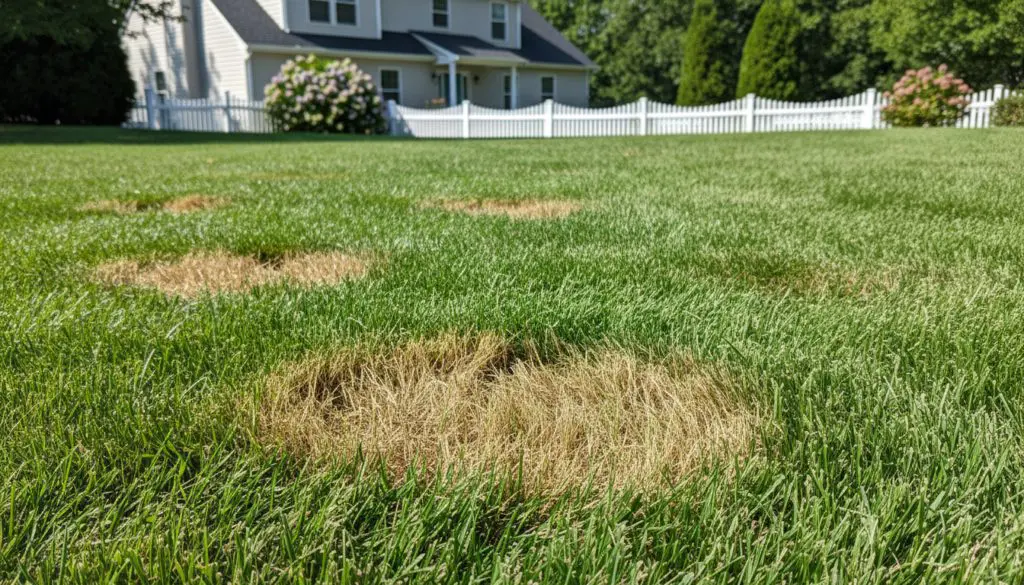
If you’ve been searching how to fix brown spots in lawn, you’re likely frustrated by patches of grass that suddenly turned brown.
One week your lawn looks fine — the next, you’re noticing dry spots, circular patches, or areas that just won’t recover.
In North Texas communities like Justin, Haslet, Rhome, and North Fort Worth, brown patches in grass are extremely common — especially during heat waves and seasonal transitions.
The key to learning how to fix brown spots in lawn areas is identifying what’s actually causing them.
Let’s break it down.
Before you can properly fix brown spots in lawn sections, you need to diagnose the root issue.
Common causes of brown patches in grass include:
Many homeowners treat the symptom instead of the cause — which is why brown spots often return.
One of the most common answers to how to fix brown spots in lawn areas in Texas is simple heat stress.
When temperatures spike:
If heat stress is the issue, solutions include:
However, if proper watering doesn’t improve the brown patches, soil issues may be involved.
Compacted soil is a major cause of brown patches in grass.
When soil becomes hard and dense:
If water pools near brown spots or the ground feels hard underfoot, lawn aeration service may be necessary.
Aeration relieves compaction and restores airflow — which often improves brown areas significantly.
For many homeowners researching how to fix brown spots in lawn sections, compaction is the hidden problem.
Brown spots can also appear in low areas where water collects.
Standing water suffocates roots and encourages fungal disease.
If brown patches consistently form in the same low areas, yard leveling service may be required to correct grading.
Proper drainage is critical for long-term lawn health in North Texas.
Pet urine often creates small circular brown patches surrounded by darker green rings.
If you suspect pet damage:
In severe cases, sod repair or spot replacement may be needed.
Warm, humid conditions in Texas can promote lawn disease.
If brown spots:
You may be dealing with fungal issues.
Professional lawn repair service can determine whether disease treatment, dethatching, or aeration is needed.
There is no universal fix for brown spots.
The correct solution may include:
Fixing brown spots in lawn areas requires correcting what’s happening beneath the surface — not just adjusting watering.
You should schedule an evaluation if brown patches:
Waiting too long can allow weeds to invade weakened areas, making repair more expensive later.
In areas like Justin, Haslet, Rhome, and North Fort Worth, clay soil and heat stress make professional diagnosis especially valuable.
To prevent brown patches in grass from returning:
Healthy soil is the foundation of preventing brown spots in lawn areas long-term.
If you’ve been repeatedly searching how to fix brown spots in lawn, the real solution is identifying the root cause — not guessing.
Surface fixes won’t correct structural soil or drainage problems.
The sooner the underlying issue is addressed, the faster your lawn can recover and thicken evenly.

Not sure what’s causing brown spots in your lawn? Schedule your free consultation today and let our team evaluate your yard, diagnose the problem, and create a clear repair plan that restores healthy, even grass.