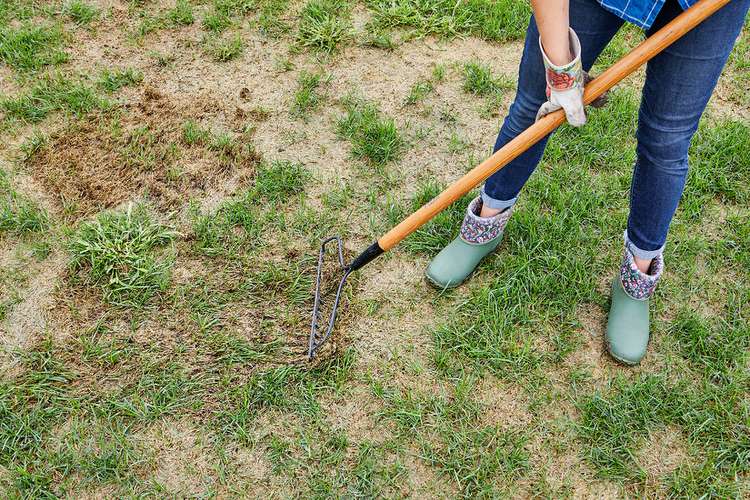
Patchy grass is one of the most frustrating lawn problems homeowners deal with.
One area looks thick.
Another looks thin.
Some spots struggle every season.
If you’re searching how to fix patchy grass in your yard, the most important thing to understand is this:
Patchiness is rarely random.
It almost always traces back to structural imbalance beneath the surface.
Let’s break down the real causes — and how to correct them properly.
Compacted soil prevents roots from expanding evenly.
High-traffic areas compress faster, creating weak zones.
Signs include:
Lawn aeration relieves compaction and restores balanced root growth.
Even soil = even density.
Water rarely distributes evenly in an uneven yard.
Low spots may stay too wet.
High spots may dry too quickly.
This creates:
Yard leveling corrects grade imbalance and promotes consistent moisture distribution.
Excess organic buildup prevents water and nutrients from reaching soil.
Grass anchored in thick thatch grows weaker and thinner over time.
Professional lawn thatching removes this barrier and strengthens anchoring.
Cutting grass too short stresses roots.
Allowing it to grow too tall before cutting causes shock.
Weekly lawn maintenance keeps growth stable and prevents stress cycles that create patchiness.
If sod was installed without proper preparation, some sections may never have rooted deeply.
Shallow-rooted areas thin faster under stress.
Selective sod repair may be required once soil structure is corrected.
Many homeowners try:
But without correcting compaction or grading, patchy grass returns.
Surface solutions don’t fix structural imbalance.
To truly fix patchy grass, focus on:
Once foundation improves, density returns naturally.
A healthy lawn should feel:
Patchiness signals imbalance.
Correct structure first — and appearance follows.

If patchy grass keeps returning in your yard, schedule your free consultation and let our team identify the structural cause so you can achieve long-term density.