If your lawn struggles year after year, the problem may not be the grass.
It may be the soil.
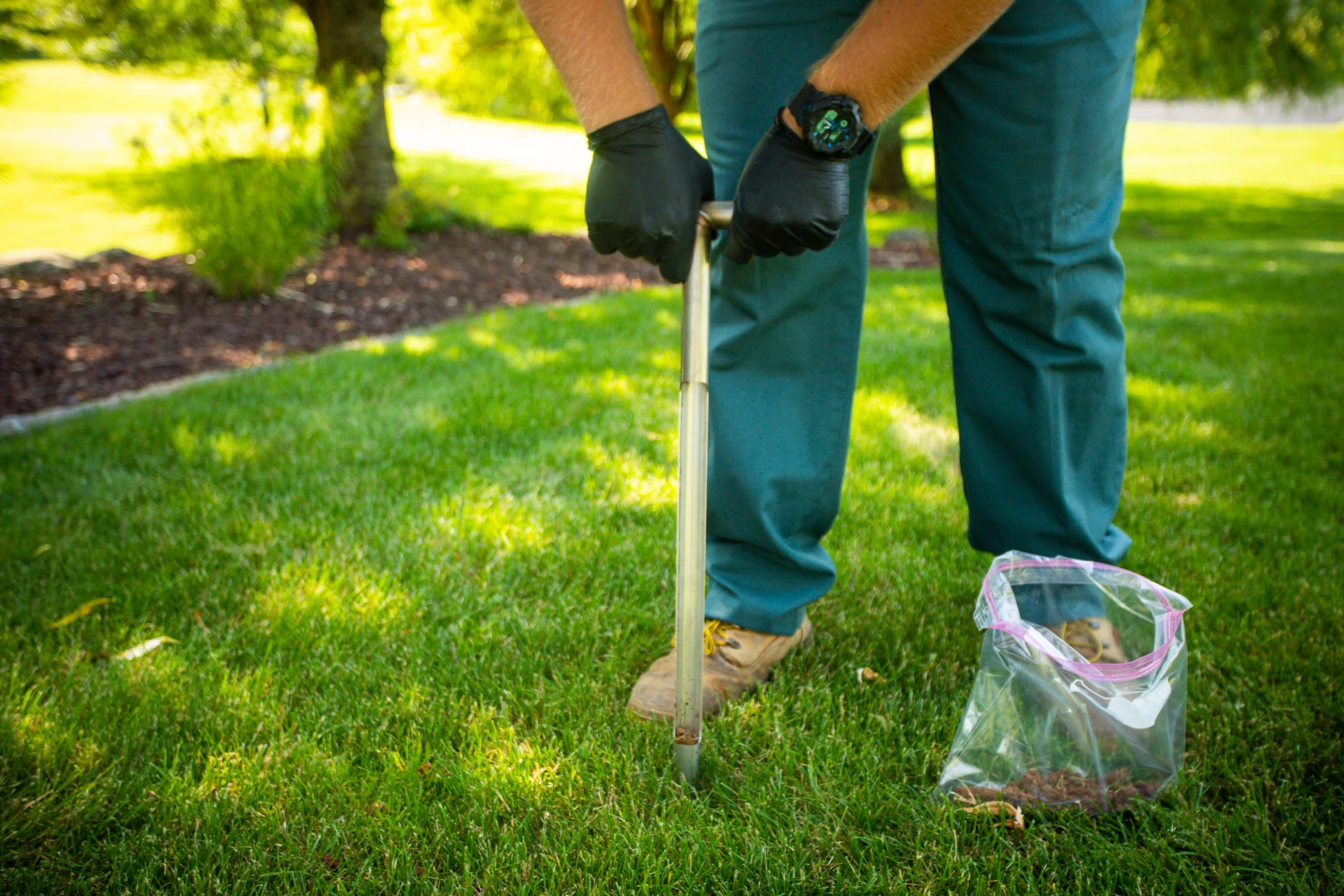
Grass depends entirely on what’s beneath it. If the soil is compacted, unbalanced, or poorly structured, the lawn can never reach its full potential — no matter how much you water or mow.
Here’s how to tell if your lawn soil is bad — and what to do about it.
After watering or rain, does water:
Healthy soil absorbs moisture evenly.
If water struggles to penetrate, compaction may be preventing proper infiltration.
Aeration can relieve that pressure and restore balance.
If the soil feels tough when you press into it, roots may be struggling to expand.
Compacted soil:
When roots stay shallow, grass weakens quickly during heat or stress.
Soil should feel firm but breathable — not like packed clay.
If your lawn never thickens — despite regular mowing and watering — the soil may lack structure or organic material.
Poor soil quality prevents turf from developing density.
Top dressing improves soil composition and supports long-term strength.
Stronger soil builds thicker grass.
Different shades of green often signal uneven soil conditions.
Some sections may hold moisture better.
Others may dry quickly or struggle with compaction.
When soil health varies, grass performance varies.
Balancing soil conditions creates consistent color.
Recurring dead patches often trace back to soil problems.
Weak soil:
Replacing grass without fixing the soil simply repeats the cycle.
The foundation must improve first.
If there’s a thick layer of debris between the grass and soil, nutrients and water may not reach the root zone effectively.
This creates a false surface layer where roots struggle to anchor deeply.
Removing that buildup reconnects the turf to healthy soil.
If certain areas always collect water or stay damp longer than others, the soil structure may be contributing.
Leveling and grading correction help distribute moisture evenly and prevent ongoing stress.
Healthy soil supports balanced drainage.
Many homeowners blame the grass variety when performance declines.
But even high-quality sod will struggle in poor soil.
Grass reflects the condition beneath it.
If the soil is weak, the lawn will show it.
Correcting soil problems may include:
Surface improvements only last when the soil supports them.
If your lawn consistently underperforms, it’s worth asking:
Is the soil healthy enough to support it?
Strong lawns begin below ground.
Improve the soil — and the grass follows.

Not sure if your lawn soil is holding you back? Schedule your free consultation and let our team evaluate your soil condition, drainage, and structure to build a stronger foundation for healthy turf.