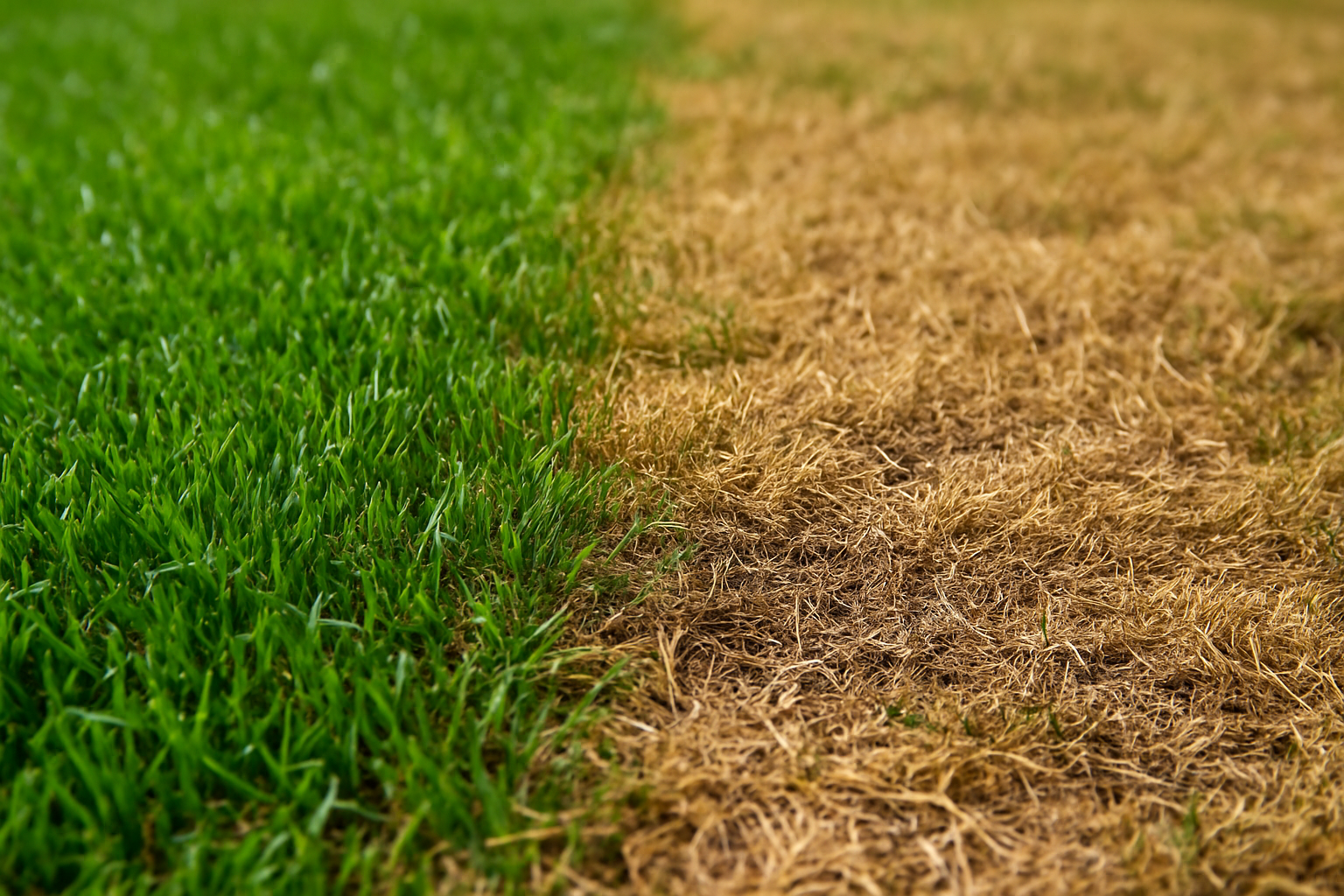
Cutting the mower deck down a notch might seem like an easy way to stretch time between mows, but scalping — cutting grass significantly shorter than it should be — is one of the most damaging mistakes a lawn can suffer.
What Scalping Actually Does to Grass
Grass relies on its blade length to photosynthesize and generate energy for root growth. When a mower removes too much of that blade at once, the plant is left without enough leaf surface to produce adequate energy, forcing it to draw on root reserves just to recover. Repeated scalping weakens the entire root system over time, leaving grass thinner, patchier, and far more vulnerable to heat and drought stress.
Why Scalping Happens So Often
Scalping usually isn't intentional — it happens when mowing gets delayed and grass grows taller than usual, tempting homeowners to cut it back down to a "normal" height in one pass. It also happens on uneven yards, where low spots get scalped even when the mower deck is set at an appropriate height for the rest of the lawn.
The One-Third Rule Prevents Scalping
The safest way to avoid scalping is to never remove more than one-third of the grass blade's height in a single mow. If grass has grown taller than that threshold, it's better to mow it down gradually over two or three sessions spaced a few days apart, rather than cutting it all the way down at once.
Scalping's Long-Term Effects on Lawn Health
Beyond the immediate stress response, chronically scalped lawns develop shallower root systems over time, since the grass never gets the chance to build the deeper roots that longer blade length supports. Shallow roots mean less drought tolerance, more vulnerability to weeds moving into thin patches, and a lawn that generally struggles to recover from any additional stress.
How Uneven Terrain Makes Scalping Worse
Yards with dips, low spots, or uneven grading are especially prone to scalping, since a mower set at a consistent height will cut lower spots more aggressively than higher ones. Addressing significant grading issues, or adjusting mowing technique around known low spots, helps prevent recurring damage in those areas.
Getting Your Lawn Back on Track
A lawn recovering from scalping benefits from a period of consistent, properly timed mowing at the correct height, along with adequate watering to support recovery. Getting back onto a regular mowing schedule — rather than letting the cycle of overgrowth and scalping repeat — is the most reliable way to restore lawn health.

Tired of your lawn taking damage from inconsistent mowing? Reach out to Lawn Crisis to get on a schedule that keeps your grass at the right height, every time.