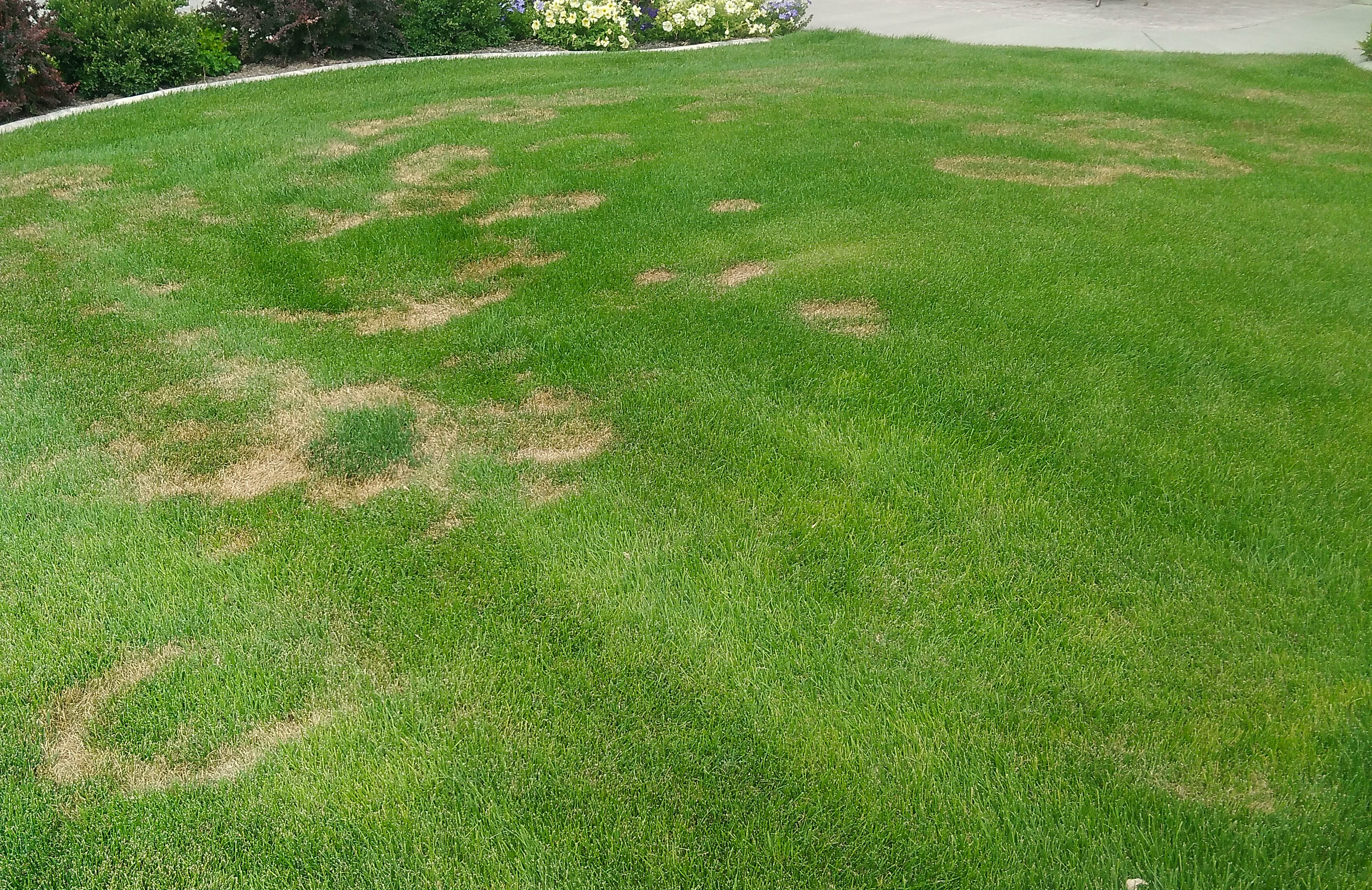
Brown rings in grass can be alarming.
They often appear suddenly.
Circular.
Defined.
Sometimes spreading.
If you’re searching what causes brown rings in grass, you’re likely worried about disease — and sometimes that’s correct.
But brown rings aren’t always caused by one single issue.
They’re a symptom.
And identifying the cause early determines whether the lawn recovers quickly or continues declining.
Let’s break down the most common reasons brown rings form — and how to correct them properly.
Circular damage usually points to one of three underlying factors:
The ring shape forms because stress often spreads outward from a central point.
Understanding the pattern helps determine the solution.
One of the most common causes of brown rings in grass is fungal growth.
Fungal issues thrive in:
When drainage is unbalanced, certain sections remain wetter longer — creating ideal conditions for fungus.
Signs it may be fungal:
Correcting drainage imbalance and relieving soil compaction are critical steps in preventing recurrence.
If your yard has low spots, water may collect in specific areas.
Standing moisture suffocates roots.
As roots weaken in the center, surrounding turf may continue growing — creating a ring-like appearance.
Yard leveling helps correct grade imbalance and restore even water distribution.
Without structural correction, rings may return after every heavy rain.
Compacted soil restricts oxygen flow.
When roots can’t access air or nutrients, grass weakens from the center outward.
Lawn aeration relieves compaction and restores breathable soil conditions.
Improving root depth prevents repeat stress cycles.
Pet-related damage often forms circular brown patches with greener outer rings.
This happens because:
If pet damage is severe, affected sections may require soil correction or selective sod replacement.
However, structural balance must be restored first.
Excess thatch prevents water from reaching soil evenly.
Certain areas may dry out faster while others trap moisture.
Professional lawn thatching removes organic buildup and restores consistent soil connection.
Balanced soil reduces irregular growth patterns.
Many homeowners treat brown rings with surface solutions:
But if the root cause is structural — compaction or grading — rings reappear.
Surface correction without soil correction leads to repetition.
The proper solution depends on cause.
Check for pooling after rain.
Correct grade imbalance if necessary.
Aeration improves oxygen flow and strengthens roots.
Excess buildup may be contributing to moisture imbalance.
If turf is beyond recovery, selective sod installation may be necessary after structural correction.
To reduce recurring circular damage:
Healthy soil conditions prevent pattern-based stress.
Brown rings are rarely just discoloration.
They’re signals of imbalance.
Correcting structure restores uniform growth and prevents repeat damage.

If you’re seeing brown rings in your lawn, schedule your free consultation and let our team identify whether drainage, compaction, or soil imbalance is causing the issue.