Healthy grass should look vibrant and consistent.
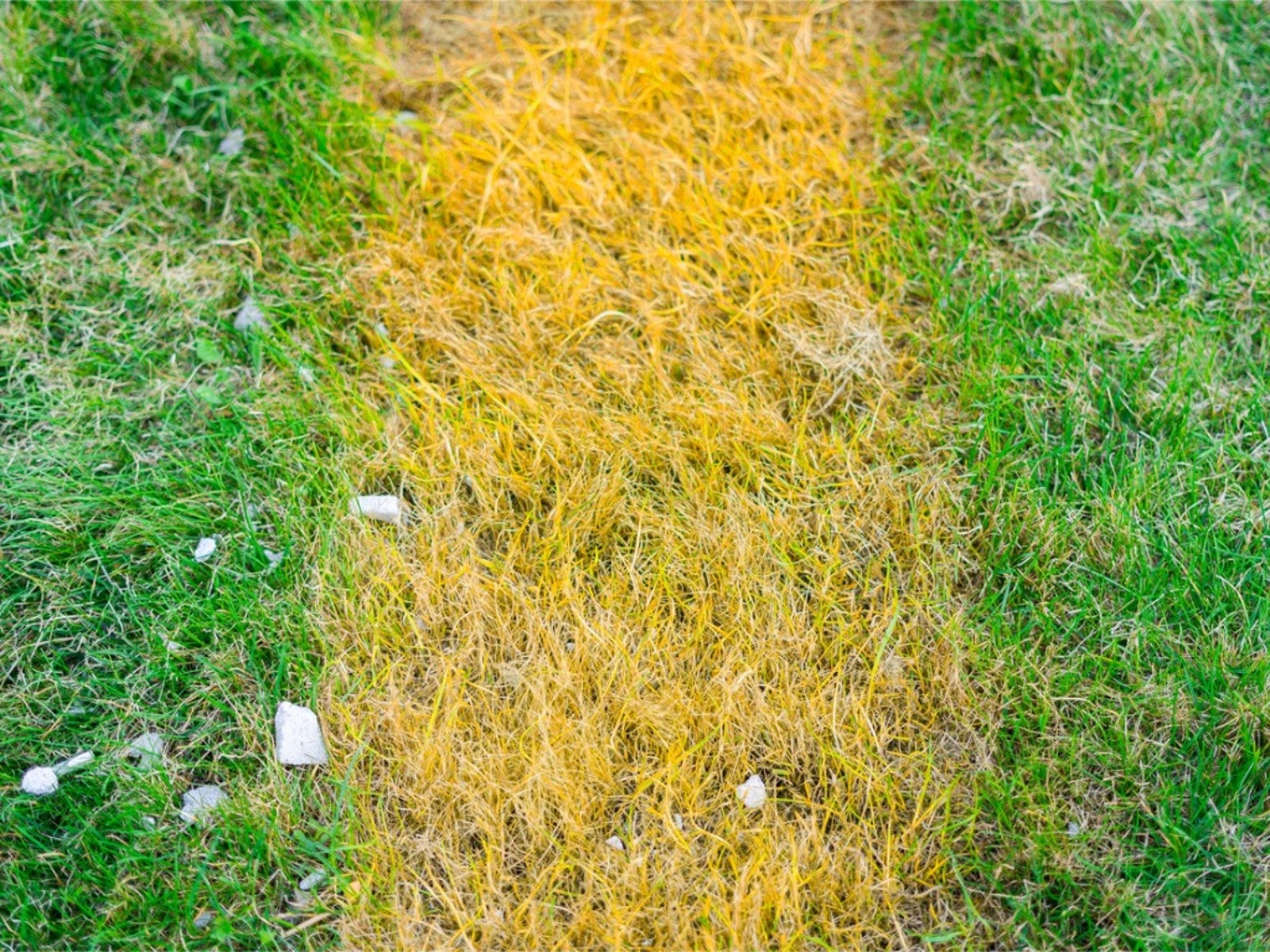
So when your lawn suddenly starts turning yellow, it can feel alarming.
Yellowing turf is one of the most common lawn complaints — and one of the most misunderstood.
If you’re searching why is my grass turning yellow, the answer usually isn’t just “lack of water.”
Sudden yellowing is a symptom of stress.
And that stress almost always traces back to soil structure, drainage imbalance, or maintenance inconsistencies.
Let’s break down the most common causes — and how to fix them properly.
Compacted soil prevents roots from accessing oxygen and nutrients.
When roots can’t breathe, grass begins to discolor.
Signs compaction may be the issue:
Lawn aeration restores airflow and allows roots to recover.
Breathable soil strengthens color and density.
Too much water can be just as damaging as too little.
When soil remains saturated:
Yellow patches often appear in low spots where water collects.
Yard leveling corrects grading imbalances and improves moisture distribution.
Balanced drainage protects root health.
In hotter periods, shallow-rooted grass may yellow quickly.
If compaction limits deep root growth, turf becomes more vulnerable to drought stress.
Consistent weekly lawn maintenance at proper mowing height helps protect roots during stress cycles.
Proper height preserves moisture.
Excess thatch prevents water and nutrients from reaching soil evenly.
Grass above thick thatch layers may yellow due to limited soil contact.
Professional lawn thatching restores connection between roots and soil.
Healthy soil contact improves color consistency.
If soil quality varies across your yard, certain areas may lack essential nutrients.
Top dressing improves soil composition and supports balanced nutrient availability.
Even soil equals even color.
Pet urine can cause concentrated nitrogen burn in small circular areas.
These spots may yellow before turning brown.
Severe damage may require soil correction and selective sod replacement.
But structural balance must be restored first.
When root systems weaken, turf becomes vulnerable.
Yellow zones may:
Correcting the underlying structural cause prevents spreading damage.
Surface greening products rarely solve foundational issues.
To restore healthy color, focus on structure:
Correcting foundation restores natural green color.
Healthy grass should:
When soil breathes and moisture balances, color stabilizes naturally.
Yellowing is not random.
It’s a signal.
Correct the structure, and the lawn recovers.

If your grass is turning yellow and you’re unsure why, schedule your free consultation and let our team evaluate whether compaction, drainage, or soil imbalance is limiting your lawn’s health.