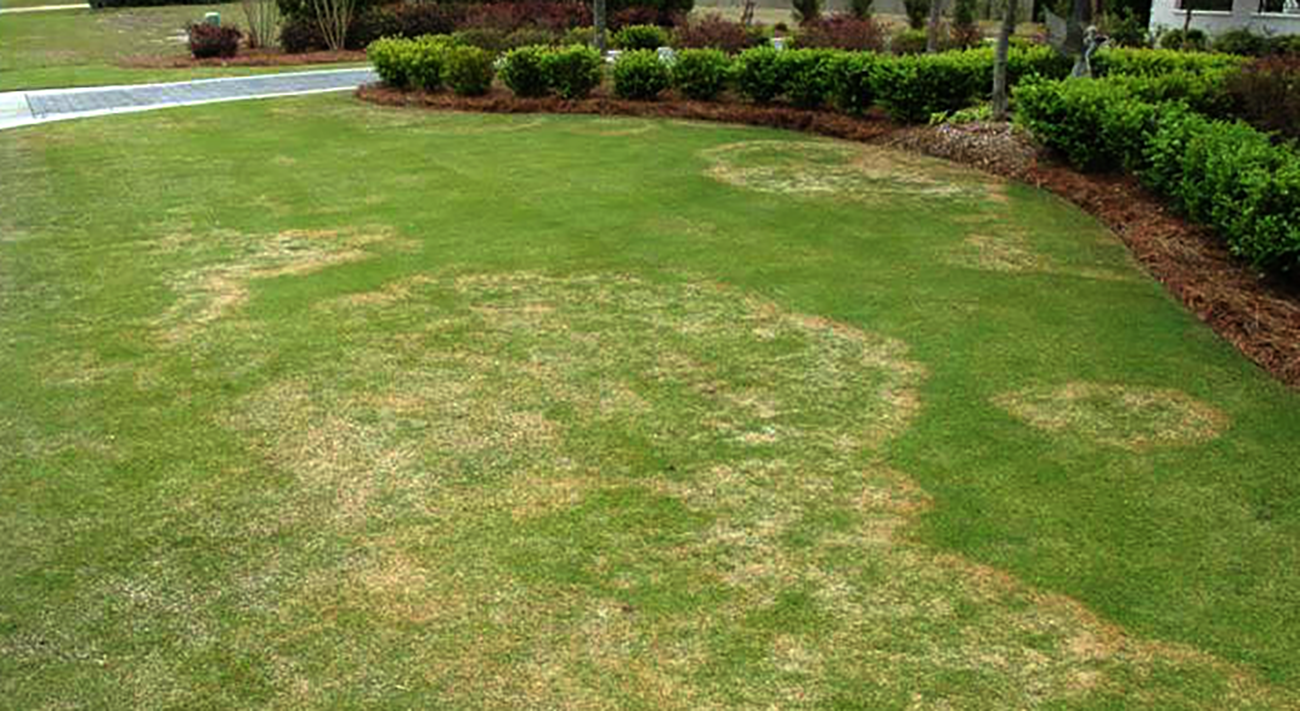
If you’re noticing circular patches, strange discoloration, or grass that seems to be spreading damage outward, you may be dealing with lawn fungus.
Fungus can look alarming.
But here’s what most homeowners don’t realize:
Fungus is usually a symptom — not the root problem.
Before treating it, it’s important to understand why it’s happening.
Fungal lawn problems often appear as:
The grass may feel weak, damp, or matted.
But fungus doesn’t just appear randomly.
It thrives under specific conditions.
The most common cause of lawn fungus is too much moisture.
This can come from:
When roots stay wet for extended periods, oxygen levels drop and fungus becomes more likely.
If water pools or the soil feels constantly damp, grading or leveling may be needed to correct drainage imbalance.
Healthy soil needs oxygen.
Compacted soil limits airflow and creates an environment where fungus can grow more easily.
When soil becomes dense:
Aeration improves airflow and strengthens root systems, making the lawn more resilient.
Excess thatch traps moisture near the surface.
This creates a warm, damp environment — ideal for fungal growth.
When thatch becomes too thick, water can’t reach the soil properly.
Instead, it sits in the upper layer, encouraging disease.
Removing that buildup restores balance and reduces fungal risk.
Scalping or mowing too low weakens grass.
Weak turf is more vulnerable to disease.
Maintaining proper mowing height helps:
Consistent mowing at the right height is a simple but powerful prevention tool.
Overfeeding or underfeeding the lawn can stress turf.
Excess nitrogen may cause rapid growth that becomes vulnerable.
Poor soil quality may prevent proper nutrient absorption.
Improving soil structure supports balanced, stable growth.
Healthy grass resists fungus more effectively.
Many homeowners try quick treatments:
But unless the underlying cause is corrected, fungus often returns.
The key is addressing:
Fix the environment — not just the symptom.
Long-term prevention focuses on:
When roots are strong and soil breathes properly, fungus struggles to take hold.
If fungal patches:
It’s time to evaluate the structure of the lawn.
Recurring fungus usually signals deeper imbalance.
Correcting the foundation prevents repeat outbreaks.
Fungus isn’t random.
It’s a response to stress and imbalance.
Strengthen the soil. Improve airflow. Balance moisture.
When the lawn’s foundation is healthy, disease becomes far less common.

Seeing signs of lawn fungus? Schedule your free consultation and let our team evaluate your soil, drainage, and turf condition to stop the problem at its source — not just on the surface.