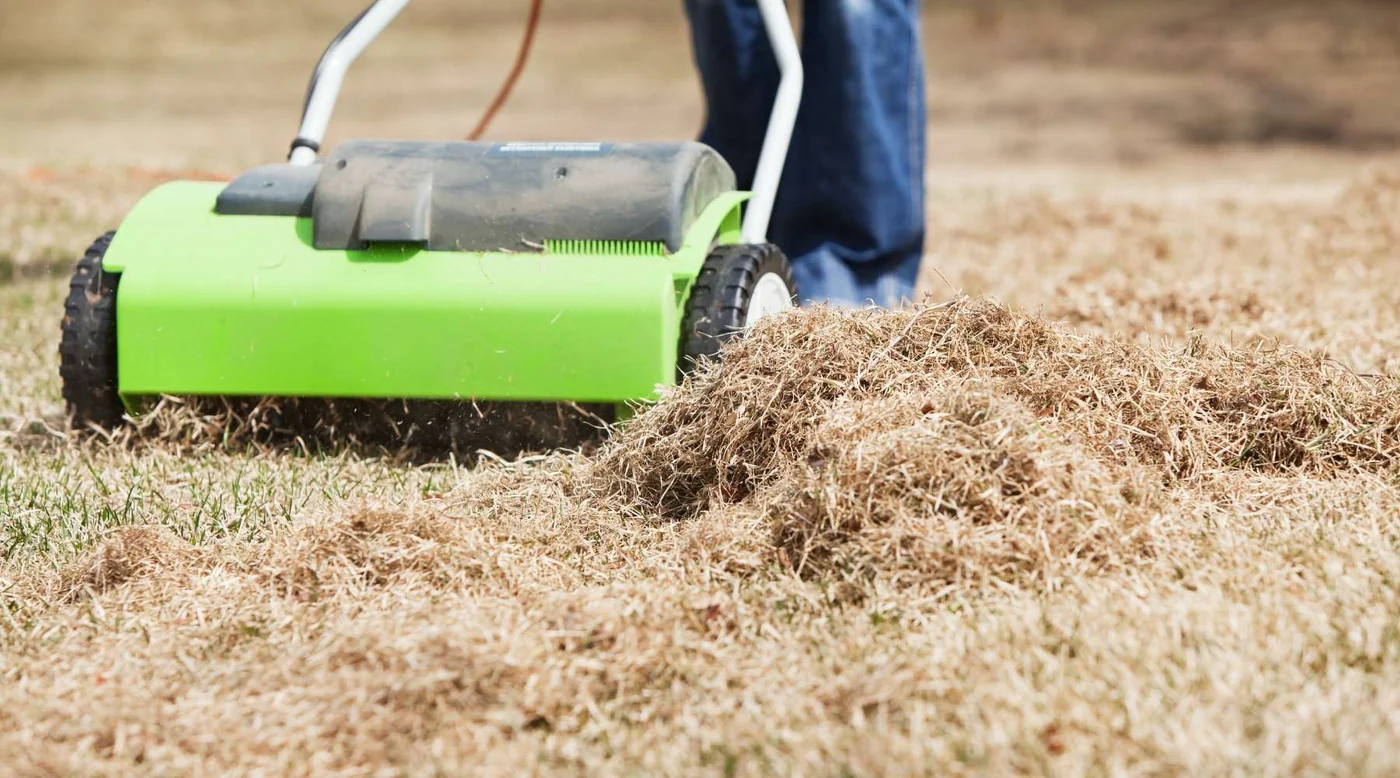
Most homeowners don’t think about thatch until something goes wrong.
Grass feels spongy.
Water sits on the surface.
Growth becomes uneven.
Color starts fading.
If you’re searching when to dethatch your lawn, you’re already noticing signs that something underneath the surface isn’t functioning properly.
Dethatching isn’t cosmetic.
It’s structural.
Let’s break down what thatch is, when it becomes a problem, and how removing it restores turf health.
Thatch is a layer of organic material that builds up between the soil and the grass blades.
It consists of:
A thin layer of thatch is normal.
But when that layer becomes too thick, it begins blocking essential functions.
When thatch exceeds about half an inch, it starts interfering with:
Instead of rooting into soil, grass begins rooting into thatch.
This creates weak, shallow root systems.
Shallow roots lead to thin turf.
If you’re unsure when to dethatch your lawn, look for these warning signs:
If your lawn feels soft or springy underfoot, excessive thatch may be present.
Healthy lawns should feel firm but stable.
Thatch can trap water at the surface.
Instead of absorbing evenly, moisture lingers above the soil.
This contributes to drainage imbalance.
If certain areas struggle to grow while others remain thick, soil contact may be blocked by buildup.
Dethatching restores direct connection between roots and soil.
Grass may yellow despite proper watering if nutrients can’t reach the roots.
Removing excess thatch improves absorption efficiency.
Trapped moisture creates ideal conditions for fungal growth.
Correcting thatch buildup improves airflow and reduces risk.
Dethatching should be done when grass can actively recover.
It is often paired with:
Combining structural services maximizes recovery and long-term performance.
Timing depends on turf type and soil condition, which is why professional evaluation matters.
In many cases, excessive thatch forms due to:
If underlying compaction remains, thatch may rebuild quickly.
Lawn aeration often complements dethatching to restore full soil function.
Structure must be corrected — not just surface buildup.
When performed properly, dethatching:
Balanced soil contact restores long-term health.
Grass thrives when roots anchor deeply into healthy soil.
Excess buildup interrupts that connection.
Removing thatch restores balance.
Healthy soil contact leads to stronger, more resilient turf.

If your lawn feels spongy or struggles with uneven growth, schedule your free consultation and let our team evaluate whether dethatching and soil correction can restore proper balance.