If your lawn feels soft, looks thin, or struggles despite regular watering, the problem might be hiding just below the surface.
Thatch buildup is one of the most overlooked causes of lawn decline.
A professional lawn thatching service removes that barrier and restores healthy soil contact — allowing your grass to grow stronger from the ground up.
Here’s why that matters.
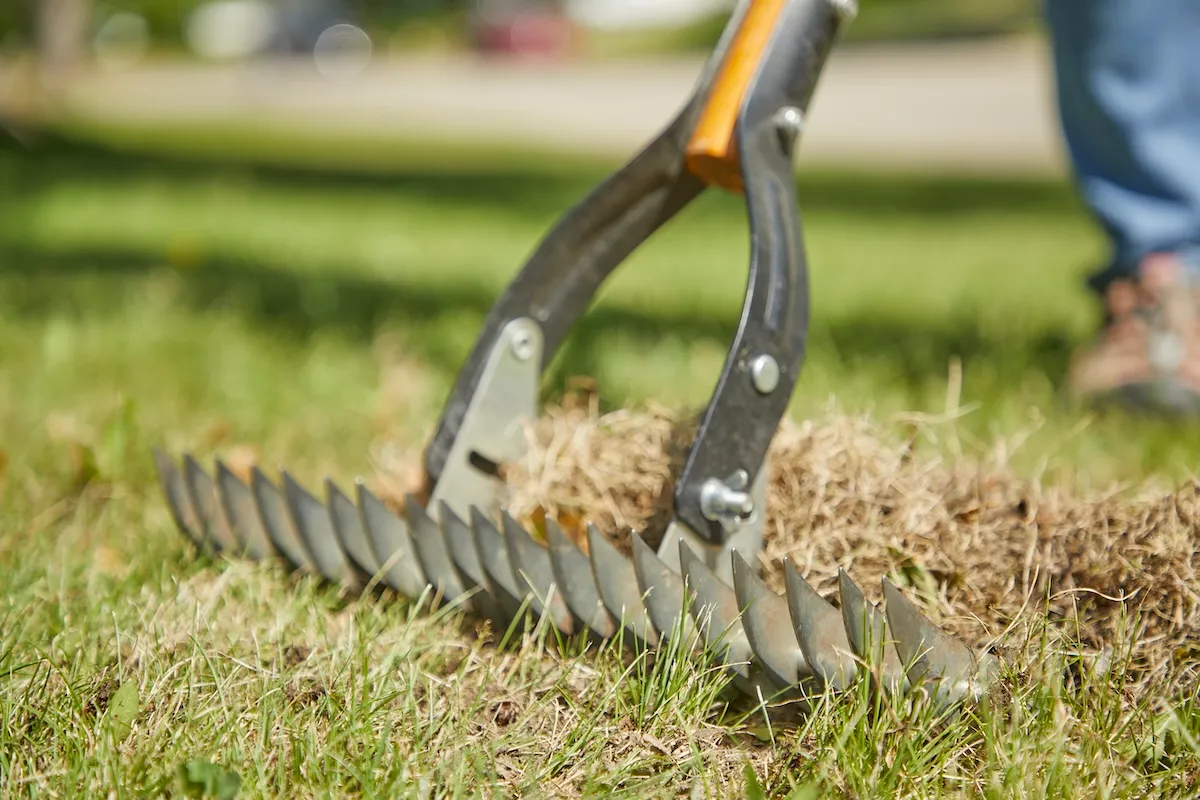
Thatch is a layer of:
That accumulates between the soil and the living grass blades.
A thin layer is normal.
But when thatch becomes too thick, it begins to interfere with lawn health.
When thatch builds up excessively, it can:
The lawn may appear green on top — but struggle underneath.
Over time, this leads to thinning and stress.
You may need professional dethatching if:
These are indicators that the root zone is not functioning properly.
A lawn thatching service removes excess buildup so grass can reconnect with the soil.
This process:
Once the barrier is removed, the lawn can absorb what it needs to thrive.
Thatching and aeration are often confused — but they solve different problems.
Thatching removes surface buildup.
Aeration relieves soil compaction beneath the surface.
In many cases, combining both services creates the strongest recovery.
Together, they restore full soil function.
Thatching is most effective when:
Timing matters — removing thatch at the wrong stage can stress grass unnecessarily.
Professional evaluation ensures proper application.
Aggressive or uneven dethatching can:
A professional lawn thatching service removes buildup carefully and evenly — protecting the lawn while restoring balance.
Regular dethatching helps:
Healthy grass requires direct soil contact.
Thatch buildup interrupts that connection.
If your lawn looks tired or disconnected from the ground, excess thatch may be the issue.
Removing it restores the environment where roots grow.
Healthy soil contact leads to healthy turf.

If your lawn feels spongy or struggles to stay thick, schedule your free consultation and let our team evaluate whether professional lawn thatching service can restore strength beneath the surface.