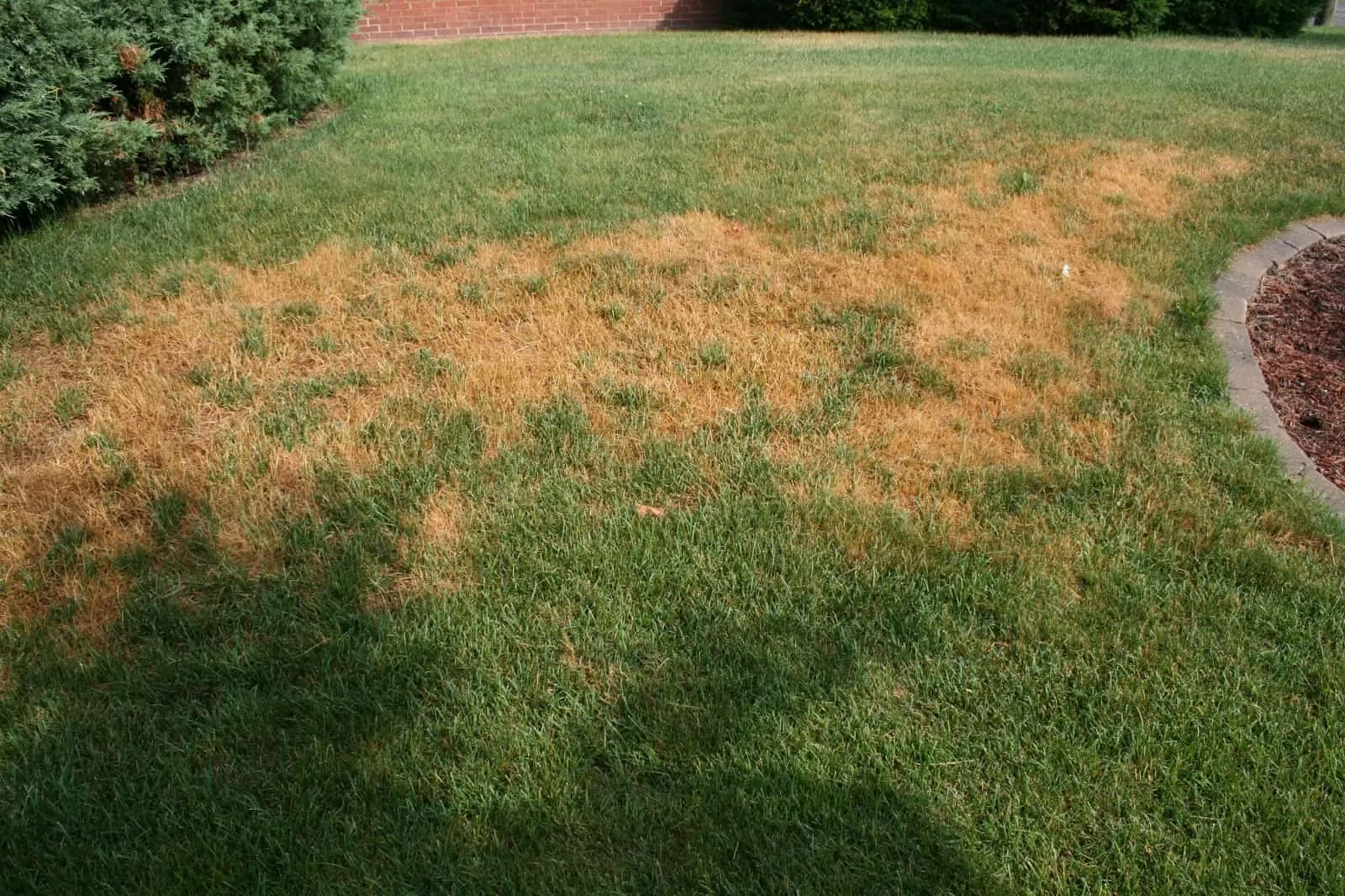
One of the most frustrating lawn problems homeowners face is this:
You water consistently.
You mow regularly.
But your grass still turns brown.
If you’ve been asking, “Why does my grass turn brown even when I water it?” the issue usually isn’t a lack of water.
It’s what’s happening beneath the surface.
Here are the most common brown lawn causes — and what actually fixes them.
Watering doesn’t help if the soil can’t absorb it properly.
Compacted soil prevents:
Instead of reaching roots, water runs off or sits near the surface.
Lawn aeration relieves compaction and allows moisture to move deeper into the soil profile.
Without airflow, roots weaken.
Too much water in certain areas can be just as damaging as too little.
If your yard has low spots or uneven grading, water may pool in specific sections.
Saturated roots struggle to breathe, leading to:
Correcting lawn drainage problems through yard leveling restores balanced moisture distribution.
Excess thatch buildup creates a barrier between water and soil.
When thatch becomes too thick:
Professional lawn thatching removes that barrier and restores direct soil contact.
Healthy grass must connect to soil — not just organic buildup.
Mowing too low is one of the most common brown lawn causes.
Short grass:
Professional lawn mowing service maintains proper cutting height to protect turf during stressful conditions.
Height matters more than many homeowners realize.
If soil quality varies across the yard, some areas will perform differently.
Top dressing improves soil structure and supports stronger, more consistent root systems.
Uneven soil leads to uneven performance.
If roots have not developed deeply, grass becomes highly sensitive to environmental changes.
Shallow roots:
Structural services like aeration and soil correction strengthen root depth over time.
Deeper roots create resilience.
Many homeowners respond to browning grass by watering more.
But if:
More water won’t solve the problem.
It may even worsen it.
Correcting structure is more important than increasing irrigation.
If your grass turns brown even with regular watering, focus on:
Once the foundation improves, color and density naturally follow.
Healthy grass grows where conditions support it.
If watering hasn’t solved the problem, it’s time to look deeper.
Brown grass often signals soil imbalance — not neglect.
Fix the structure beneath the surface, and recovery becomes consistent.

If your lawn keeps turning brown despite regular watering, schedule your free consultation and let our team evaluate the underlying cause to restore healthy, even growth.