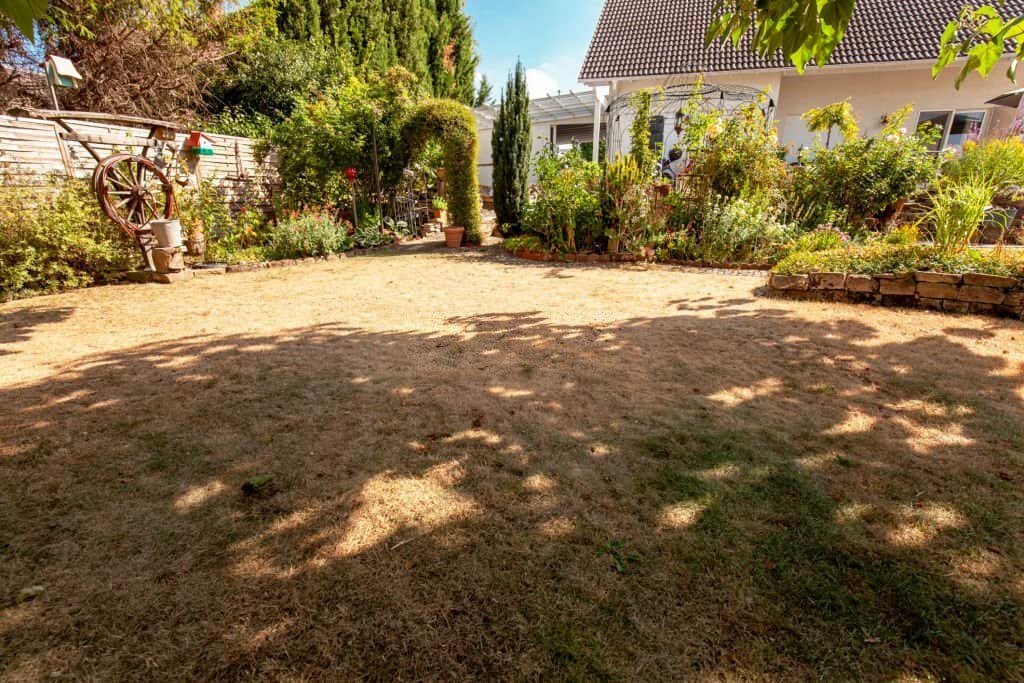
If your lawn feels hard as concrete when you walk across it, that’s a clear warning sign.
Healthy soil should feel slightly firm — but not rock solid.
When the ground becomes dense and rigid, roots struggle to grow and water struggles to penetrate.
If you’re asking why your lawn feels hard, the answer is usually soil compaction.
Here’s what’s happening beneath the surface.
Soil naturally compresses over time.
Common causes include:
Each season adds pressure.
Without intervention, soil becomes tighter and less breathable.
When soil becomes compacted:
Grass growing in compacted soil develops shallow roots and weak resilience.
Hard soil leads to thinning turf over time.
Besides feeling hard underfoot, you may notice:
These symptoms often appear gradually.
Compaction builds silently.
Many homeowners respond to thinning turf by watering more.
But if the soil is compacted, water cannot penetrate properly.
It either runs off or stays near the surface.
This can worsen drainage imbalance instead of helping the lawn.
The issue isn’t moisture — it’s soil structure.
Professional lawn aeration service removes small plugs of soil from the ground.
This process:
Aeration creates space within the soil profile.
That space allows roots to expand naturally.
Once soil breathes again, you’ll notice:
Compacted soil lawn problems don’t correct themselves.
They require structural intervention.
To avoid repeated compaction:
Proactive soil care prevents gradual decline.
If your lawn feels hard as concrete, don’t ignore it.
That firmness signals restricted growth and limited oxygen beneath the surface.
Relieving compaction restores balance and protects long-term turf health.

If your lawn feels hard or compacted, schedule your free consultation and let our team determine whether professional lawn aeration service can restore healthy soil structure.