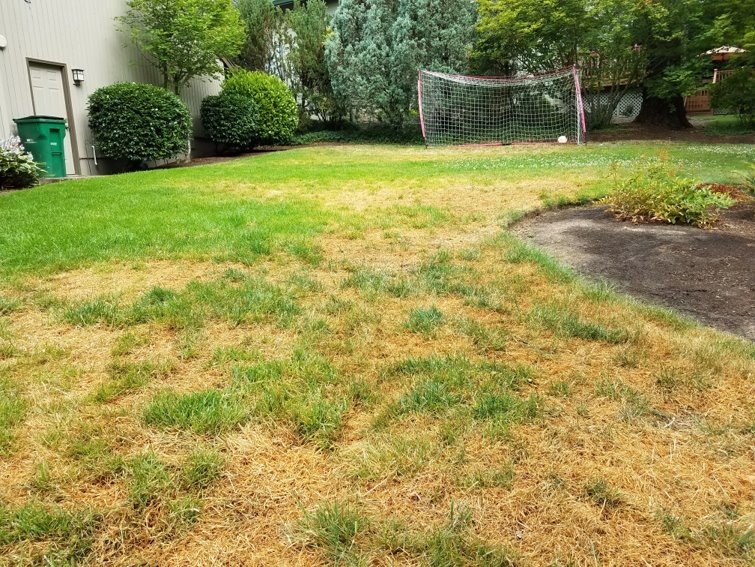
If you’ve been asking, “Why does my lawn look patchy?” — you’re not alone.
Patchy lawns are one of the most common complaints from homeowners in North Texas.
You may notice:
In areas like Justin, Haslet, Rhome, and North Fort Worth, patchiness is rarely random.
It’s usually a structural issue.
Here’s what causes patchy grass — and how to fix it correctly.
One of the biggest causes of patchy lawns in North Texas is compacted clay soil.
When soil becomes compacted:
The result?
Some areas grow fine. Others struggle.
Lawn aeration service relieves compaction and restores airflow beneath the surface.
Without improving soil structure, patchy growth continues.
If certain areas hold water while others dry quickly, growth becomes inconsistent.
Low spots may:
Higher spots may:
Professional yard leveling corrects slope and balances moisture distribution.
Even drainage supports even growth.
Thatch creates a barrier between soil and grass.
When excessive, it:
This causes uneven performance across the lawn.
Professional thatching service restores soil connection and encourages thicker growth.
Cutting grass too short in certain areas or skipping weeks can weaken sections of turf.
Scalped areas:
Weekly lawn maintenance at proper height ensures balanced growth across the yard.
Consistency reduces patchiness.
Some sections of your yard may have:
Top dressing adds nutrient-rich soil and improves structure in weak areas.
Better soil equals more uniform turf.
High-traffic areas and pet spots often appear as small, consistent patches.
Over time, repeated stress weakens these sections.
Spot repair or sod installation may be necessary if damage is severe.
Texas summers expose structural weaknesses.
If the lawn wasn’t aerated or prepared before heat arrives, patchiness becomes more noticeable.
Summer doesn’t create the issue — it reveals it.
Preparation prevents visible decline.
Fixing patchy grass requires identifying the root cause first.
Solutions may include:
Throwing seed at the problem rarely works if soil and drainage remain unchanged.
Ignoring uneven growth usually leads to:
Early correction is always easier and more affordable.
A healthy lawn should look:
Achieving uniform turf in North Texas requires improving the soil, not just the surface.
If you’re wondering why your lawn looks patchy, the answer is usually beneath your feet.
Strong lawns are built from the ground up.
And once the structure is corrected, even growth follows.

Seeing patchy areas in your yard? Schedule your free consultation today and let our team evaluate your soil, drainage, and lawn condition to create a repair plan that restores thick, even growth.