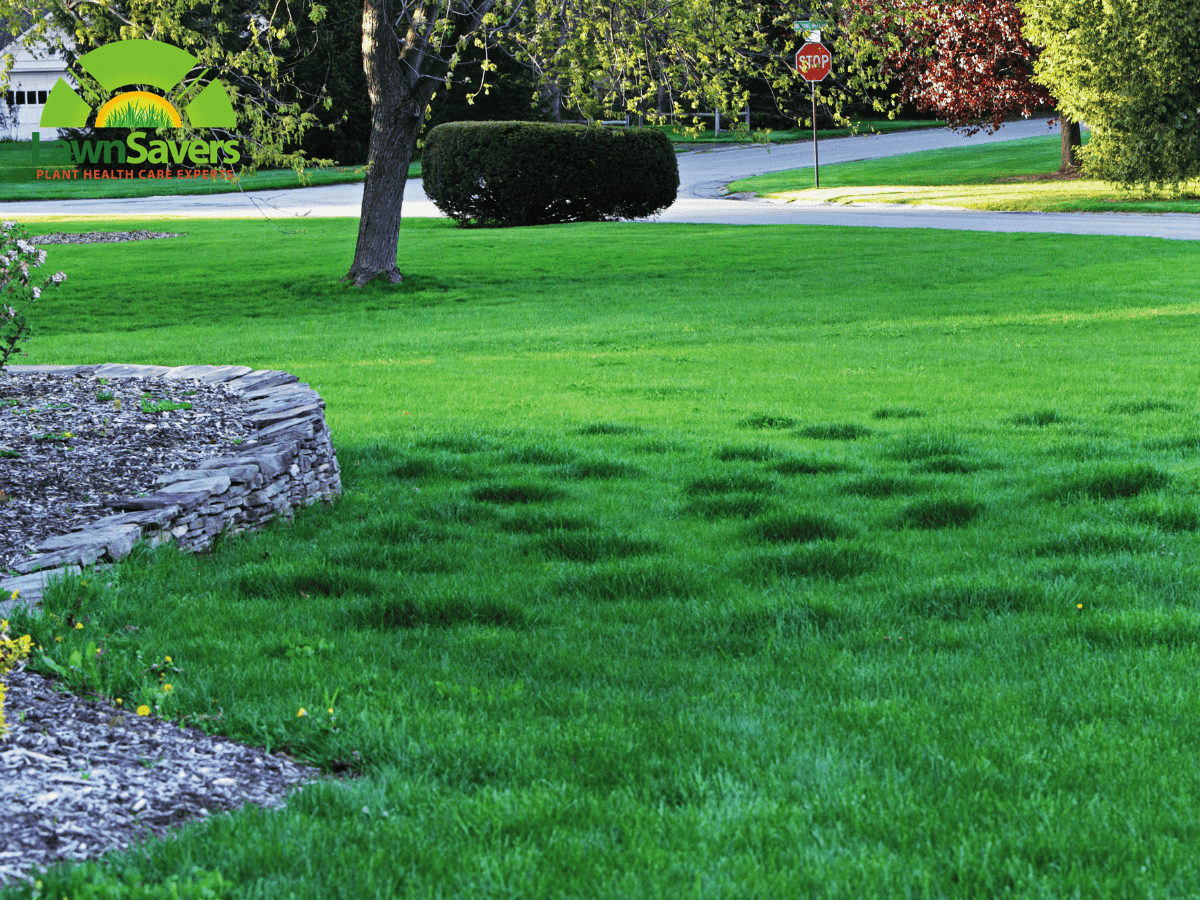
Sometimes the lawn isn’t brown.
It isn’t dead.
It’s green — but it still looks off.
If you’ve been wondering why your lawn looks uneven even when it’s green, you’re noticing something important.
Color doesn’t equal structure.
An uneven lawn appearance usually signals imbalance beneath the surface.
Here’s what’s causing it.
Even small dips and rises can disrupt visual consistency.
Low spots may:
High spots may:
Yard leveling service corrects these subtle imbalances and restores uniform performance across the surface.
Balanced grade creates balanced growth.
Some areas may be more compacted than others.
Compacted zones absorb less water and limit root depth.
The result?
Different growth speeds in different sections.
Lawn aeration relieves compaction and promotes even root expansion.
Even soil creates even grass.
Thatch doesn’t always build evenly.
Certain sections may have more organic buildup than others.
This leads to:
Professional lawn thatching restores consistent soil contact.
If the lawn surface isn’t smooth, mowing exaggerates unevenness.
Raised areas may be cut shorter.
Lower areas may remain slightly taller.
Over time, these differences become noticeable.
Correcting surface irregularities helps mowing look uniform.
Soil naturally settles over time.
Small shifts create shallow dips that affect both water flow and visual symmetry.
Top dressing can correct minor uneven areas before they expand into larger grading issues.
Early correction prevents bigger repairs later.
If sod was installed without proper leveling and preparation, roots may not have bonded evenly.
This creates slight height variations that show up under certain lighting.
Fix uneven grass at the structural level — not just visually.
A lawn can be green but still:
Uniform color doesn’t guarantee uniform soil health.
True balance happens beneath the surface.
To correct uneven lawn appearance, focus on:
Structural alignment creates visual alignment.
If your lawn looks uneven even when it’s green, trust your instincts.
You’re noticing surface symptoms of deeper imbalance.
Correcting structure restores uniformity, stability, and a cleaner overall appearance.

If your lawn looks uneven or inconsistent, schedule your free consultation and let our team evaluate whether grading, aeration, or structural correction is needed to restore balance.