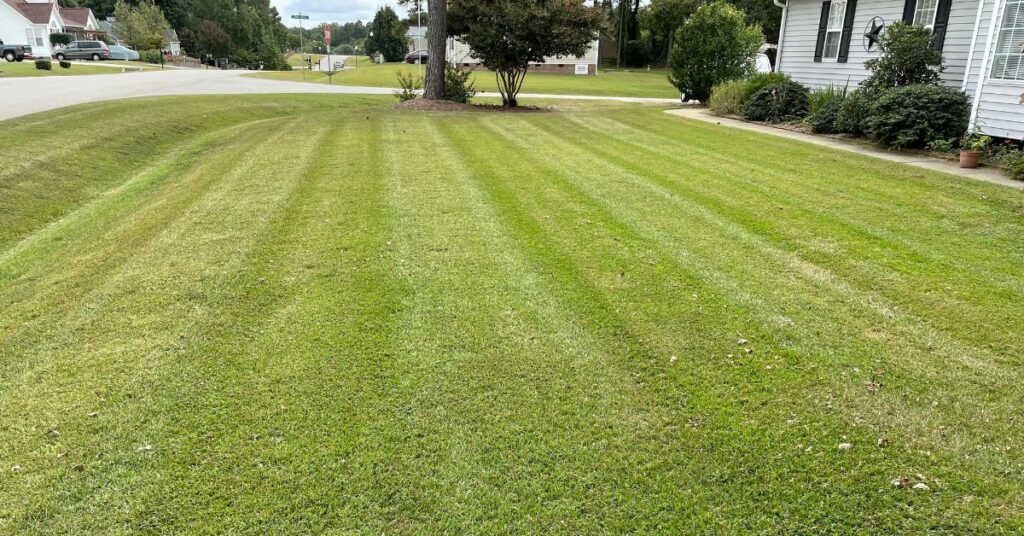
You step outside and notice it immediately.
One section looks deep green.
Another looks pale.
A few areas look almost yellow.
You’re watering consistently.
You’re mowing regularly.
So why does your lawn look uneven in color?
When grass changes shade across different sections, it’s usually responding to differences in soil, moisture, or root strength — not random chance.
Here’s what’s actually happening.
Not all areas of your lawn experience the same pressure.
Foot traffic, mower paths, and natural soil settling can cause certain sections to become more compacted than others.
Compacted soil restricts:
When roots struggle, grass appears lighter or duller.
Lawn aeration helps restore airflow and often corrects uneven color caused by compaction differences.
If one area receives more moisture than another, color variation follows.
Overwatered sections may look:
Underwatered sections may look:
Drainage issues and uneven grading can create moisture imbalance without you realizing it.
Leveling and slope correction often improve color consistency.
Even if fertilizer is applied evenly, soil quality may not be uniform.
Some areas may have:
Top dressing improves soil composition and helps balance nutrient absorption across the lawn.
When soil improves, color evens out.
Cutting grass too short in certain sections can create color variation.
Shorter grass reflects light differently and may appear lighter.
It also experiences more stress.
Maintaining consistent mowing height through structured weekly maintenance helps preserve uniform color.
Consistency builds visual balance.
If some areas have thicker thatch buildup, water and nutrients may not penetrate evenly.
This can cause one part of the lawn to thrive while another struggles.
Thatching restores soil contact and improves uniform growth.
Some sections of your yard may receive:
Heat stress often shows up as color fading first — before visible thinning occurs.
Strengthening the soil structure helps grass tolerate these environmental differences.
Color variation is often the first visible sign of deeper stress.
If left uncorrected, uneven color can turn into:
Early correction prevents larger repairs.
A healthy lawn should:
When soil, drainage, and maintenance are aligned, color naturally evens out.
Strong roots produce strong color.
If your lawn looks uneven in color, don’t ignore it.
It’s an early signal that something beneath the surface needs attention.
Fix the structure — and the color follows.

Noticing different shades across your lawn? Schedule your free consultation and let our team evaluate your soil, drainage, and turf health to restore consistent, healthy color throughout your yard.