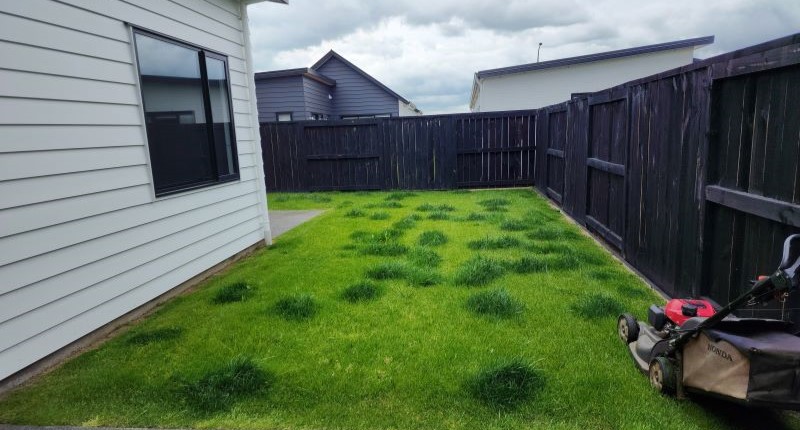
Have you noticed that one section of your lawn grows thick and fast…
while another area barely grows at all?
You mow one side — and the other still looks short.
You water evenly — but growth isn’t consistent.
If your lawn is growing faster in some areas, it’s not random.
Grass responds directly to soil conditions, moisture levels, sunlight, and root health.
Uneven growth usually means uneven conditions beneath the surface.
Here’s what’s really going on.
Some parts of your yard experience more pressure than others.
Foot traffic, mower paths, and even natural soil settling can create compacted zones.
Compacted soil restricts:
In compacted areas, grass grows slower and thinner.
Meanwhile, less compacted sections thrive.
Lawn aeration helps restore balance by relieving dense soil and allowing roots to grow evenly across the yard.
Water distribution plays a major role in growth patterns.
Low areas may hold moisture longer, creating faster growth.
Higher spots may dry out quickly, slowing development.
If water collects in certain zones after rain, grading may be affecting performance.
Leveling uneven areas improves moisture balance and creates more consistent growth.
Some parts of your yard may receive:
Grass in sunnier areas often grows faster — but can also stress more easily if soil is weak.
Shaded areas may grow slower but stay greener longer.
While sunlight can’t always be changed, improving soil health helps grass adapt to varying conditions.
Not all soil is equal across your yard.
Some sections may contain:
Poorer soil zones struggle to support consistent growth.
Top dressing improves soil composition and helps even out performance.
When soil structure improves, growth evens out.
If thatch is thicker in one part of your yard, it may block nutrients and water from reaching roots.
This creates slower growth in that section while other areas flourish.
Professional thatching restores contact between soil and turf, encouraging uniform development.
Repeated mowing in the same direction can slightly affect turf density over time.
Also, cutting some sections shorter than others creates growth imbalance.
Maintaining consistent mowing height and alternating patterns promotes uniform recovery.
Weekly maintenance keeps growth regulated and balanced.
Uneven growth is often the first visible sign that something beneath the surface isn’t aligned.
Left uncorrected, uneven growth can turn into:
Addressing the root cause early prevents larger lawn repair later.
A healthy lawn should grow at a consistent rate across the entire surface.
That requires:
When those factors align, uneven growth fades naturally.
If your lawn is growing faster in some areas than others, it’s giving you information.
Grass doesn’t behave differently without reason.
Correct the imbalance beneath the surface — and uniform growth follows.

Noticing uneven growth across your yard? Schedule your free consultation and let our team evaluate your soil, grading, and lawn condition to restore consistent, healthy development.