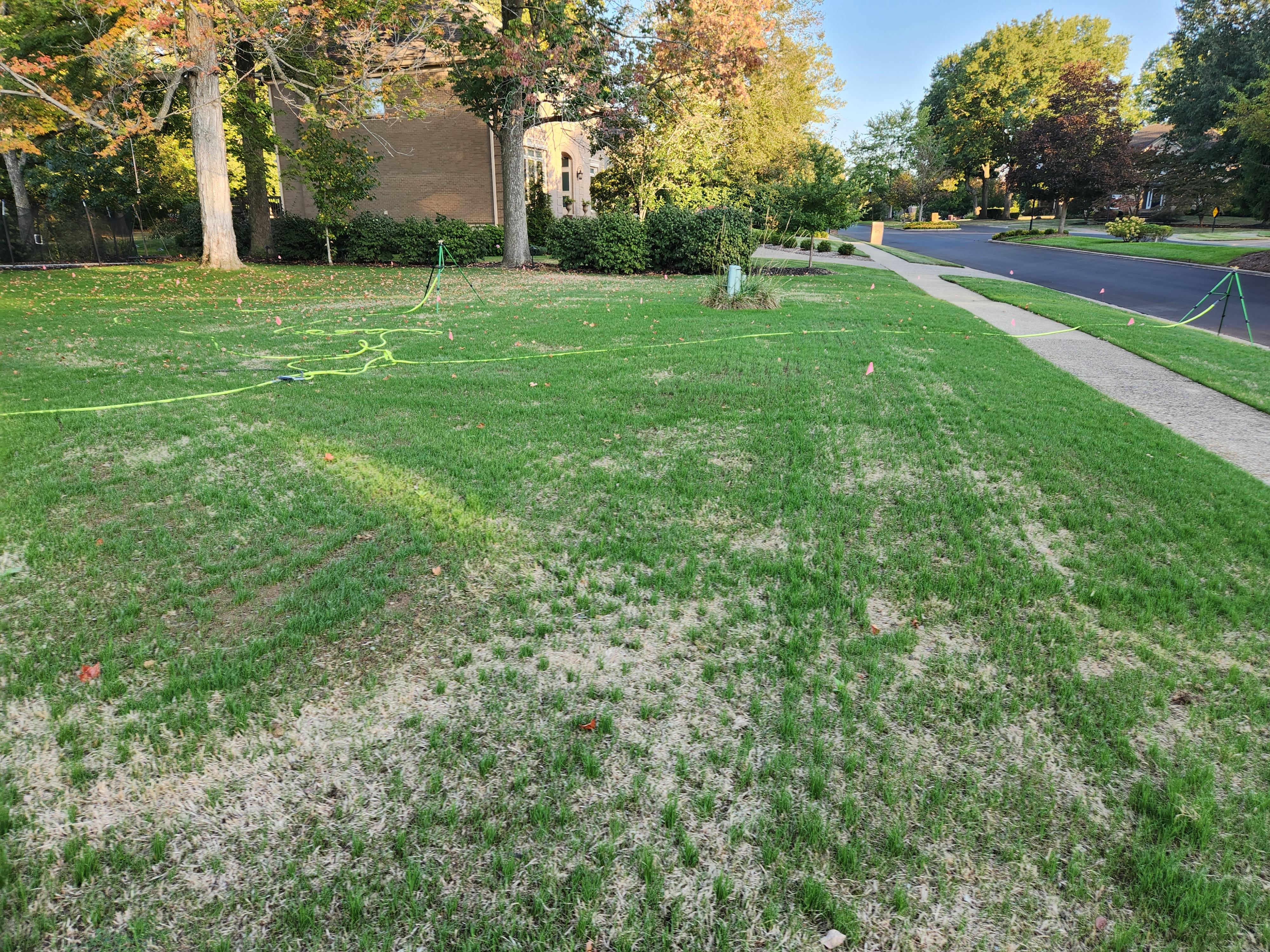
A thick lawn looks healthy.
It feels soft but firm underfoot.
It hides soil completely.
If you’ve been wondering, “Why is my lawn not thick?” the issue usually isn’t just watering or fertilizer.
Thin grass problems almost always trace back to soil structure, maintenance habits, or drainage imbalance.
Here are the most common reasons your lawn lacks density.
Grass grows thick when roots grow deep.
Compacted soil prevents roots from expanding properly.
When roots stay shallow:
Lawn aeration improves airflow and encourages deeper root development — which increases density over time.
Excess thatch creates a barrier between grass and soil.
When water and nutrients cannot penetrate effectively, turf becomes thin and weak.
Professional lawn thatching restores direct soil contact and strengthens anchoring.
Healthy connection to soil improves thickness.
Cutting grass too low reduces blade surface area.
Short grass:
Maintaining proper mowing height protects turf strength and supports thicker growth.
Consistency matters more than aggressive cutting.
If some areas of your lawn receive too much water and others too little, density becomes inconsistent.
Low spots may thin due to oversaturation.
High spots may dry out quickly.
Yard leveling restores balanced moisture distribution and improves overall uniformity.
Grass depends on the environment it grows in.
If soil lacks structure or organic balance, density suffers.
Top dressing improves soil composition and supports healthier root systems.
Stronger roots produce thicker turf.
Skipping weeks between mowing or neglecting seasonal cleanup leads to stress cycles.
When turf repeatedly recovers from shock, density declines.
Weekly lawn maintenance builds stability and promotes even growth patterns.
Consistency strengthens structure.
If sod was installed without proper preparation, it may never establish deeply.
Shallow anchoring leads to long-term thin grass problems.
In severe cases, targeted lawn restoration or selective sod replacement may be necessary.
To improve turf density, focus on:
Surface treatments alone won’t create lasting thickness.
Structure determines density.
A thick lawn isn’t achieved by doing more.
It’s achieved by correcting what’s restricting growth.
When soil breathes, roots deepen.
When roots deepen, grass thickens.

If your lawn struggles to stay thick and healthy, schedule your free consultation and let our team evaluate what’s limiting density beneath the surface.