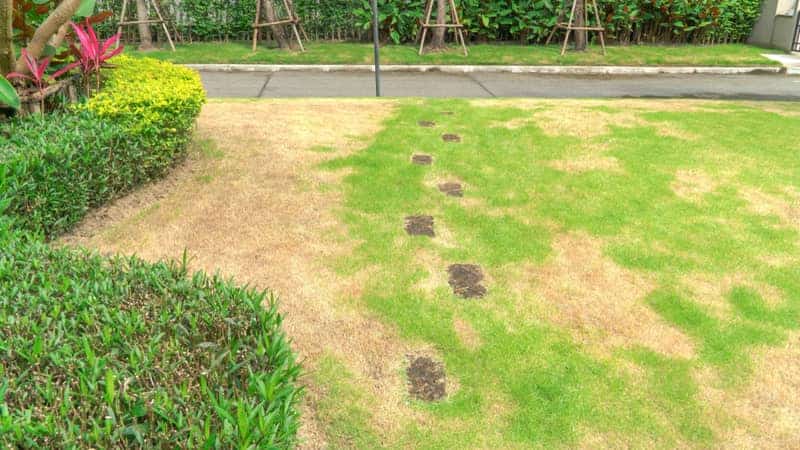
If you’ve been searching “why is my lawn patchy?”, you’re not alone. Patchy grass is one of the most common frustrations homeowners deal with.
Thin spots. Bare areas. Uneven color. Grass that just won’t grow no matter how much you water it.
The good news? Patchy lawns usually have a fix — but the solution depends on what’s causing the problem.
At Lawn Crisis, we help homeowners in Justin, Haslet, Rhome, and North Fort Worth diagnose patchy lawns and create a clear lawn repair plan that actually works.
Let’s break down the most common reasons your lawn looks patchy.
One of the biggest answers to “why is my lawn patchy?” is soil compaction.
When soil becomes packed down from foot traffic, pets, mowing equipment, or heavy clay conditions, roots can’t breathe. Water and nutrients struggle to reach the root zone.
Signs of compacted soil:
The fix? A professional lawn aeration service often solves this by relieving compaction and restoring airflow to the soil.
If certain areas of your yard stay soggy while others dry out quickly, drainage issues may be causing patchy grass.
Excess water can lead to:
Low spots in the yard may need a yard leveling service to correct grading and improve water flow.
If you’ve asked, “why is my lawn patchy in certain areas only?” drainage is often the reason.
Thatch is a layer of dead organic material that builds up between soil and grass blades.
Too much thatch:
If your lawn feels spongy underfoot, thatch may be contributing to patchy turf.
Professional dethatching service removes that buildup and allows your grass to breathe again.
Another common answer to “why is my lawn patchy?” is poor soil nutrition.
Without proper nutrients, grass struggles to thicken and fill in bare spots.
However, simply throwing fertilizer at the problem won’t work if soil structure is poor. That’s why diagnosing the underlying issue matters.
Sometimes top dressing combined with aeration provides better long-term improvement than fertilizer alone.
In some cases, patchy grass is caused by:
If the root system is too damaged, sod installation service may be the most effective solution.
Homeowners searching “why is my lawn patchy and not growing back?” often discover that repair requires more than just mowing.
The key to fixing patchy grass isn’t guessing — it’s diagnosing.
A professional lawn repair plan may include:
At Lawn Crisis, we don’t just treat the symptom. We identify why your lawn is patchy and create a plan to restore healthy growth long-term.
Ignoring patchy areas can lead to:
If you’re repeatedly asking yourself “why is my lawn patchy?” it’s time for a professional evaluation.
The sooner you address the cause, the easier the fix.
Start by observing:
From there, the right solution becomes clearer.
Patchy lawns are common — but they don’t have to stay that way.

If you’re tired of wondering why your lawn is patchy and ready for real answers, schedule your free consultation today. Our team will evaluate your yard, diagnose the root cause, and create a clear plan to restore thick, healthy grass.