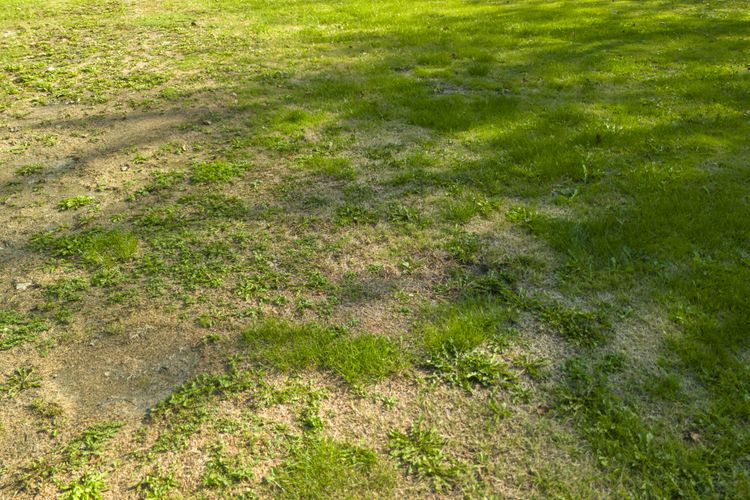
A thin lawn doesn’t happen overnight.
It starts slowly.
Grass loses density.
Color fades slightly.
Bare soil becomes visible.
Weeds begin filling the gaps.
If you’re asking, “Why is my lawn so thin?” the answer usually isn’t just watering more.
Thin grass is almost always a root problem — not a surface problem.
Here’s what’s really causing it and how to grow thicker grass the right way.
Grass gets its strength from its roots.
If the soil underneath is hard and compacted, roots can’t expand properly. That means:
When roots stay shallow, the lawn never becomes dense.
Lawn aeration allows the soil to loosen, giving roots space to grow deeper and stronger. Strong roots = thicker turf.
One of the fastest ways to thin out a lawn is mowing too low.
Short grass:
Maintaining proper mowing height helps shade the soil and support deeper roots.
Consistency builds thickness over time.
Sometimes the problem isn’t compaction — it’s poor soil composition.
If the lawn struggles despite watering and mowing correctly, it may need soil improvement.
Top dressing introduces better soil structure and organic material that supports:
Healthy soil builds thick grass naturally.
If some parts of your yard grow fine while others stay thin, water distribution may be inconsistent.
Low areas may stay oversaturated.
High areas may dry out quickly.
Leveling and correcting slope ensures even moisture throughout the lawn.
Balanced water = balanced growth.
A thin lawn can also result from excessive thatch.
When buildup sits between the soil and the grass, it blocks:
Thatching restores contact between roots and soil, helping the lawn recover density.
Skipping weeks of mowing or letting grass grow too long before cutting weakens turf over time.
The lawn grows unevenly and loses uniform thickness.
Weekly lawn maintenance keeps growth stable and prevents gradual thinning.
Density doesn’t happen by accident.
It’s built through consistency.
Thin lawns create open space.
Open space invites weeds.
As weeds compete for nutrients and sunlight, grass weakens even more.
The solution isn’t just removing weeds — it’s strengthening turf so weeds can’t compete.
Thicker grass is the best long-term weed prevention.
If your lawn looks thin, improving it may include:
The key is strengthening what’s beneath the surface.
Surface fixes won’t create lasting thickness.
Grass rarely thins without cause.
It’s usually reacting to:
The sooner you address the root issue, the easier it is to restore density.
Left alone, thin lawns become patchy lawns.
A thick, healthy lawn isn’t built with one treatment.
It’s built through structural correction and consistent care.
And once density improves, everything else becomes easier — including weed control and heat resistance.

If your lawn looks thin or weak, schedule your free consultation and let our team evaluate your soil, drainage, and turf health to create a plan that builds real density — not just temporary green.