Grass can look green on the surface — but still struggle underneath.
If your lawn feels hard underfoot, drains poorly, or seems thinner each season, soil compaction may be limiting its performance.
That’s where lawn aeration becomes essential.
Professional lawn aeration is one of the most important structural services for long-term lawn health. It restores airflow, improves water absorption, and strengthens root systems from below.
Let’s break down why lawn aeration makes such a difference.
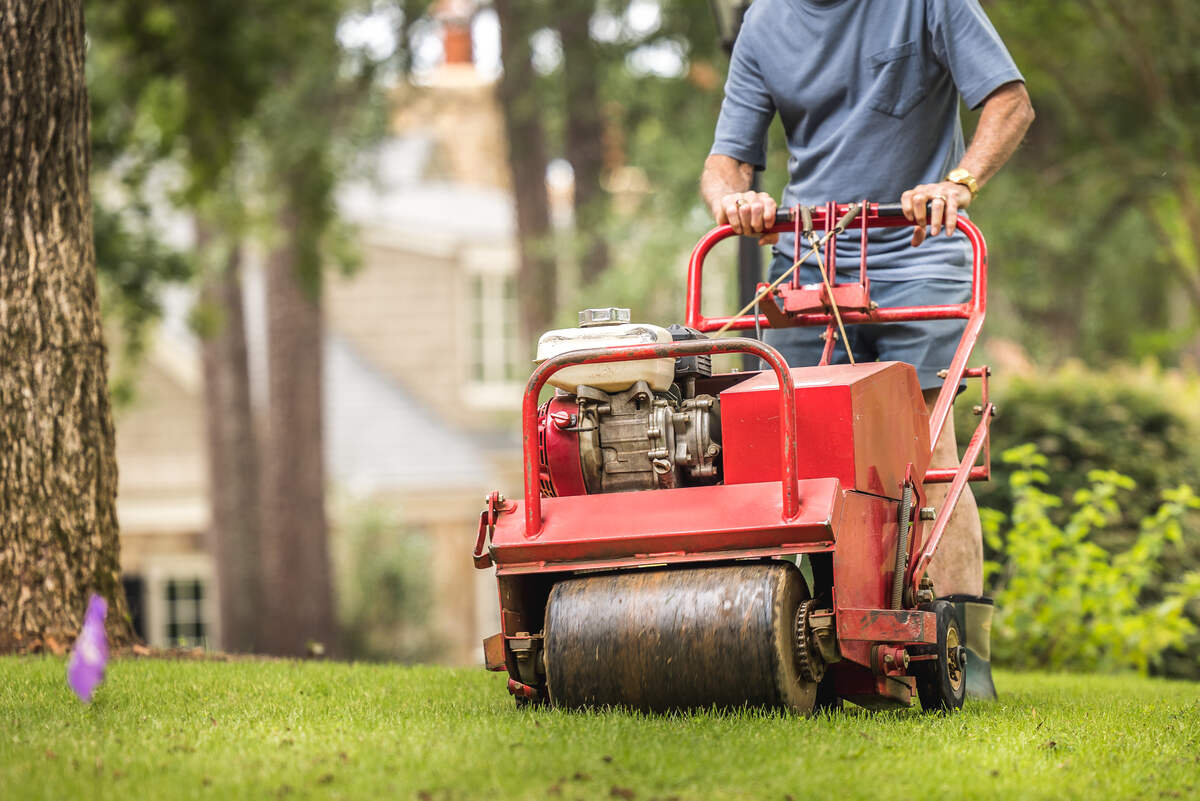
Lawn aeration is the process of creating small openings in the soil to relieve compaction and allow air, water, and nutrients to reach the root zone.
Over time, soil naturally becomes compressed due to:
Compacted soil suffocates roots.
Aeration restores breathing space.
Compacted soil limits root expansion.
When roots can’t grow deep, grass becomes:
Professional lawn aeration breaks up compacted layers and allows roots to expand properly.
Deeper roots create stronger turf.
If water pools or runs off instead of soaking in, compaction is likely the cause.
Lawn aeration improves:
Balanced hydration reduces stress and patchy growth.
Even with proper fertilization, compacted soil prevents nutrients from reaching roots efficiently.
Aeration improves nutrient flow and ensures soil amendments can actually work.
Without proper soil structure, surface treatments are less effective.
Thin lawns often result from shallow roots.
By restoring soil breathing room, lawn aeration:
Strong roots support strong blades.
Compaction and excessive thatch often occur together.
By improving soil structure, aeration helps reduce future buildup and improves direct soil-to-root contact.
It pairs well with dethatching and top dressing services.
Lawn aeration enhances the effectiveness of:
It creates a receptive foundation.
You may benefit from lawn aeration if:
Aeration restores internal balance.
DIY tools often fail to penetrate deeply enough.
Professional lawn aeration ensures:
Precision matters for long-term improvement.
Most lawns benefit from periodic aeration to maintain soil performance.
Frequency depends on:
Evaluation determines timing.
Consistent lawn aeration results in:
It strengthens the lawn from the ground up.
Healthy grass requires healthy soil.
If soil is compacted, grass cannot perform at its best.
Professional lawn aeration restores structure and gives your lawn the foundation it needs to thrive.

If your lawn feels compacted or struggles with drainage and density, schedule your free consultation and let our team determine if professional lawn aeration is the right solution.