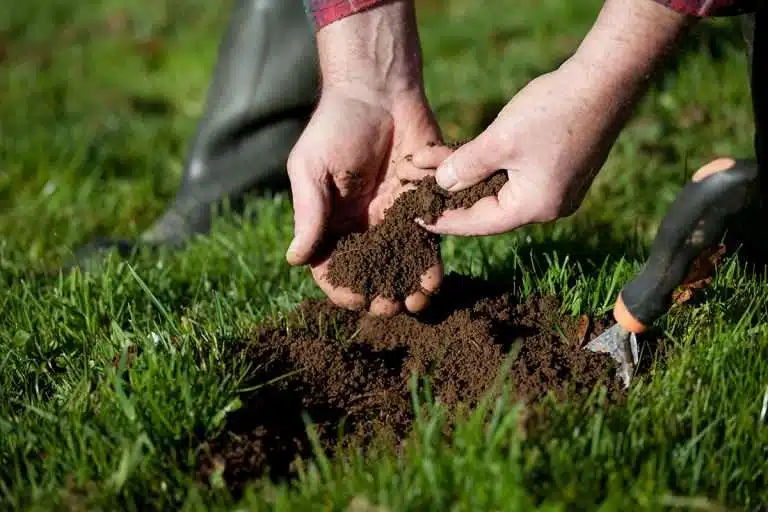
If your lawn feels like concrete underfoot, it’s more than just a cosmetic issue.
Hard soil often signals compaction, which restricts root growth, water absorption, and nutrient uptake.
Left untreated, compaction leads to thin, patchy grass and weak turf that struggles in heat or drought.
Here’s how to identify, treat, and prevent hard lawns for long-term health.
You may need professional intervention if you notice:
These are classic signs of compacted soil that prevent healthy growth.
Compacted soil limits:
Over time, the lawn becomes stressed, brittle, and more prone to disease.
Core aeration removes small plugs of soil, creating space for:
Aeration is the first step toward reversing compaction and restoring lawn vitality.
After aeration, applying nutrient-rich topsoil helps:
Combined, aeration and top dressing provide a stronger foundation for thick, healthy grass.
Lawn Crisis ensures:
DIY solutions often miss root causes, leaving lawns stressed and uneven.
The ultimate goal isn’t just a softer lawn — it’s a lawn that:
Hard lawns are reversible with the right approach.

Does your lawn feel hard or thin? Schedule your free consultation and let our team restore your yard with expert aeration, top dressing, and maintenance for a soft, thriving lawn.