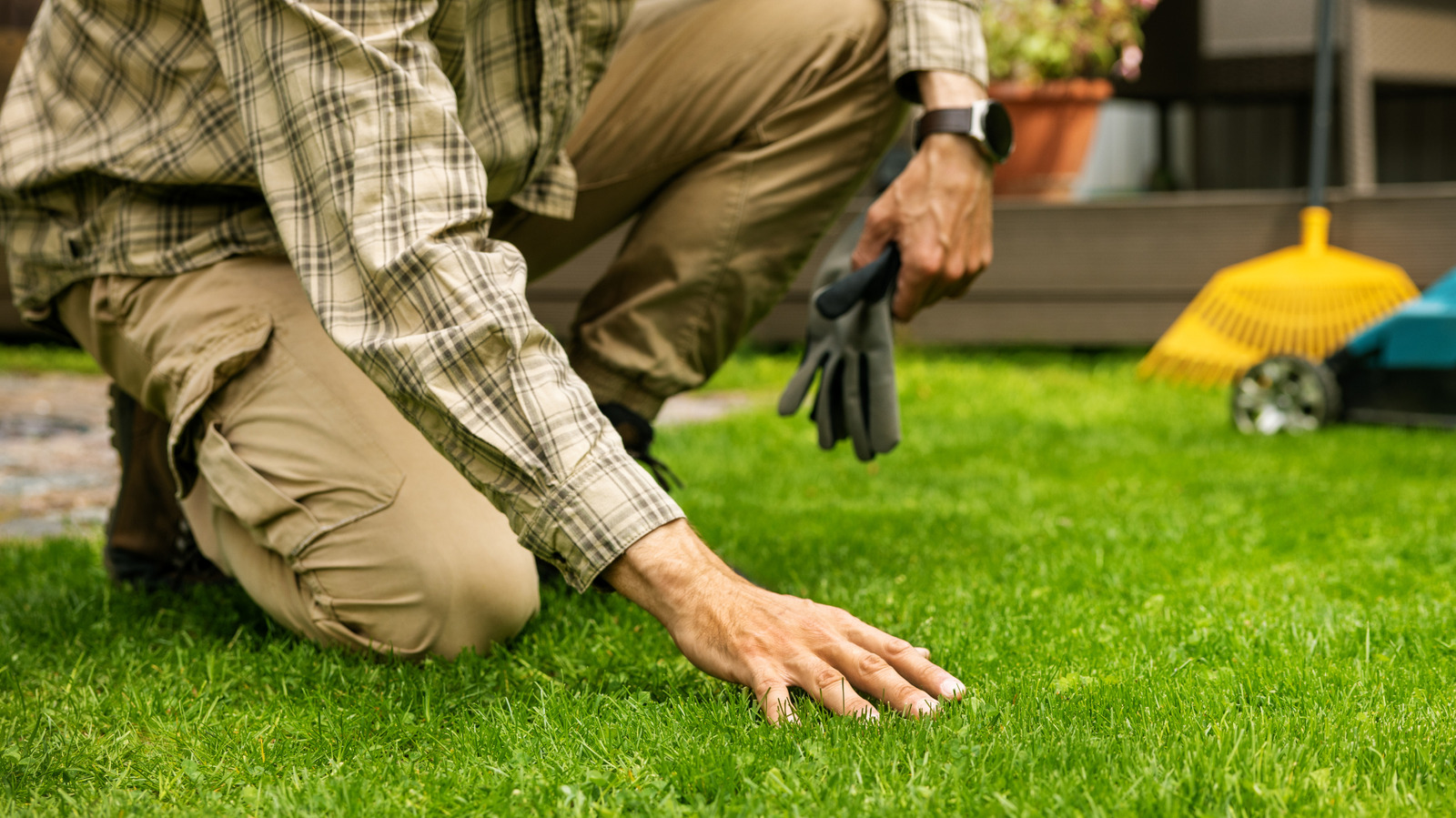
If parts of your lawn feel soft while others feel firm, that’s not random.
It’s a signal.
A healthy lawn should feel stable underfoot — slightly firm, evenly grounded, and consistent across the surface.
If you’re wondering why your lawn feels soft in certain areas, the answer usually lies beneath the grass.
Let’s break down what causes soft zones — and what they mean for your yard long-term.
Soft or spongy grass often signals imbalance in one of three areas:
These issues don’t always show up visually at first.
But your feet can feel what your eyes can’t see.
Thatch is a layer of organic material that forms between the soil and grass roots.
A thin layer is normal.
But excessive thatch:
When grass roots grow into thatch instead of soil, the lawn feels soft.
Professional lawn thatching removes buildup and restores firm soil connection.
If certain areas feel soft after rain or irrigation, drainage imbalance may be the cause.
Low spots collect water.
Oversaturated soil leads to:
Yard leveling corrects subtle grade issues and improves water distribution.
Balanced drainage restores surface stability.
It may sound contradictory, but compacted soil nearby can push water into softer areas.
Water runs off dense soil and settles in weaker sections.
This creates isolated soft spots.
Lawn aeration relieves compaction and improves overall moisture absorption.
Balanced soil structure prevents uneven softness.
Natural settling and erosion can create pockets beneath the surface.
When soil shifts:
Leveling and soil redistribution restore ground stability.
Soft areas may seem harmless.
But over time they can lead to:
Soft zones are early warnings.
Addressing them early prevents larger restoration later.
Correcting soft spots requires identifying the cause.
If buildup is excessive, dethatching is often the solution.
If water pools in certain areas, leveling may be necessary.
Aeration restores airflow and improves moisture balance.
Top dressing may help smooth shallow instability.
For larger issues, structural leveling may be required.
A healthy lawn should feel:
Soft zones indicate imbalance.
Fixing them improves both safety and turf health.
When structure is restored:
Surface feel reflects soil health.

If parts of your lawn feel soft or unstable, schedule your free consultation and let our team evaluate whether thatching, aeration, or leveling is needed to restore stability.