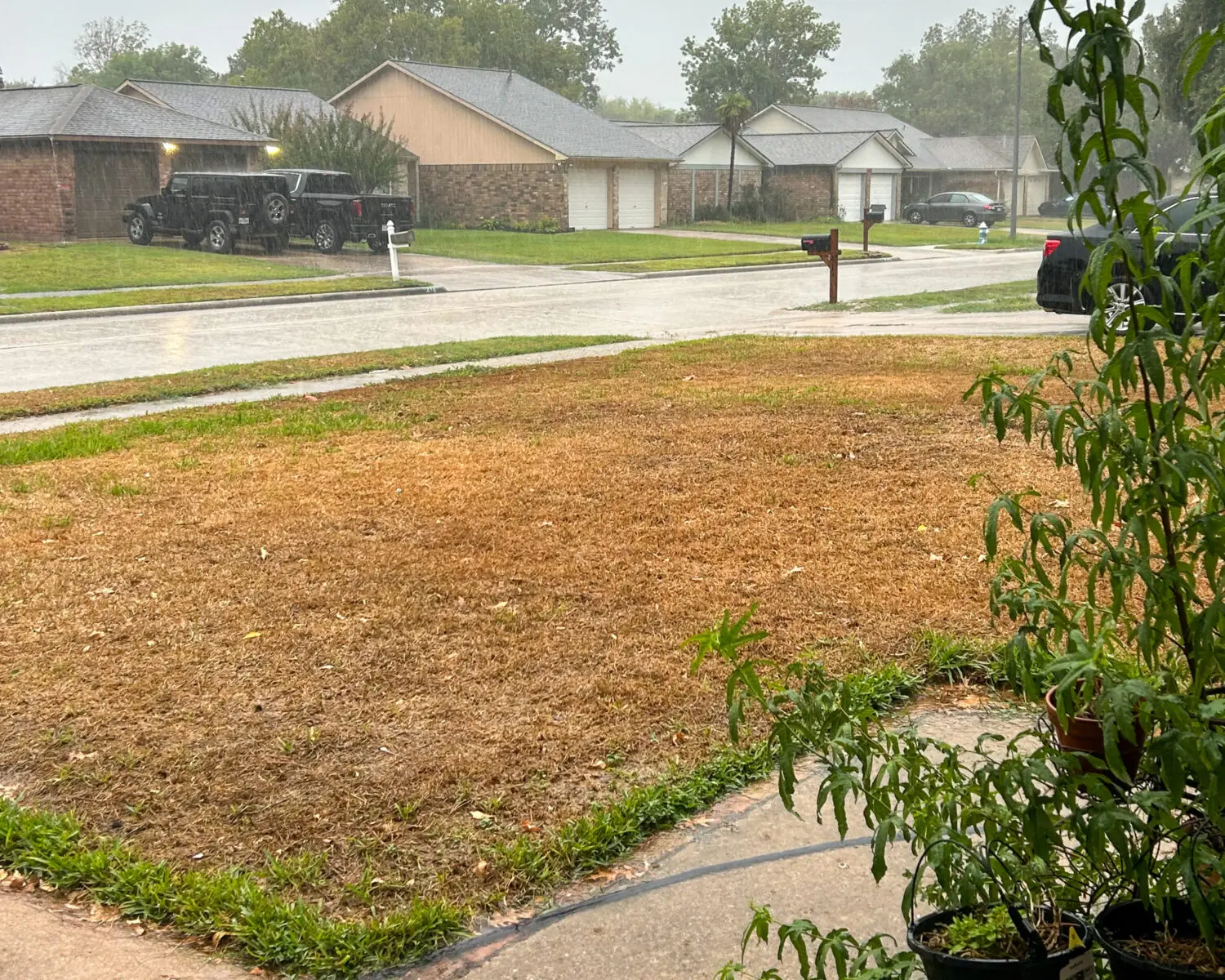
If you’ve repaired the same area of your lawn more than once, you already know how frustrating it is.
You water it.
You seed it.
You fertilize it.
It looks better for a while.
Then it dies again.
When a lawn keeps dying in the same spot, it’s almost never random. Grass doesn’t repeatedly fail without a reason. That section of your yard is reacting to something structural.
Here’s what’s usually happening.
One of the most common causes of recurring dead spots is compacted soil.
When soil becomes dense and hard:
Even if you water regularly, moisture may never reach the root zone.
This is where lawn aeration becomes critical. Breaking up compacted soil allows roots to breathe and grow deeper — which prevents that same spot from declining again.
If water collects in that area after rain — or if it dries out faster than the rest of the yard — drainage may be the issue.
Low spots can suffocate roots.
High spots can dry too quickly.
If the ground isn’t level, grass will always struggle in that section.
Yard leveling corrects slope and stabilizes water distribution so one area doesn’t constantly suffer.
Not all areas of a yard have the same soil composition.
Construction backfill, buried debris, or poor-quality fill dirt can create isolated weak zones.
If that section of lawn never thickens like the rest, improving soil structure with top dressing may be necessary.
Healthy soil supports consistent growth. Weak soil produces weak turf.
Excess thatch can build up in specific areas, especially where mowing has been inconsistent.
When thatch becomes too thick:
Professional thatching removes that barrier and restores proper soil contact.
Without removing buildup, the same section may continue declining.
Some sections of a lawn receive:
Heat stress often reveals weak roots.
If the foundation hasn’t been strengthened through aeration and consistent mowing practices, that section becomes the first to fail.
Many homeowners install new sod or reseed the dead area — but never correct the underlying issue.
Replacing grass without addressing:
Usually leads to repeat failure.
Fix the foundation first. Then restore the surface.
If the same area has died more than once, it’s time for evaluation.
A proper lawn repair approach may include:
The key is identifying the cause — not guessing.
Grass doesn’t repeatedly die in one spot by coincidence.
That area is telling you something about the structure beneath it.
Correcting the root issue once is far easier than reseeding the same patch every season.

Tired of fixing the same dead spot over and over? Schedule your free consultation and let our team evaluate what’s really happening beneath the surface so your lawn can recover the right way.