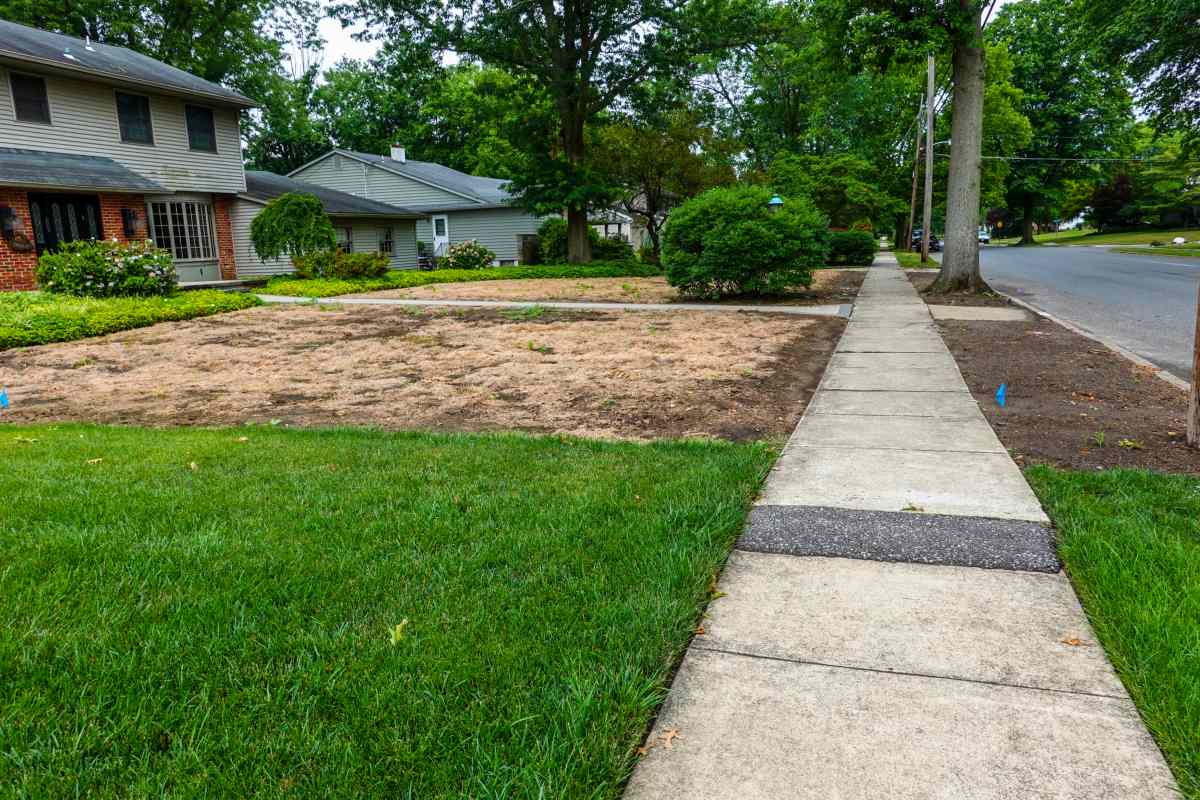
You fix a brown patch.
It comes back.
You reseed a thin area.
It struggles again.
You level a small dip.
Water still pools.
If your lawn keeps failing year after year, the issue isn’t bad luck.
It’s usually structural.
Most recurring lawn problems aren’t surface issues — they’re foundation problems that were never corrected.
Here’s what’s really happening.
Grass needs oxygen just as much as water.
If soil is compacted:
Without lawn aeration, soil gradually becomes more restrictive.
Treating symptoms without relieving compaction leads to repeated failure.
If certain areas stay wet while others dry quickly, turf health becomes inconsistent.
Poor drainage leads to:
Yard leveling corrects grade imbalance and improves long-term stability.
If drainage is never fixed, lawn problems keep returning.
Excess thatch buildup traps moisture and prevents roots from anchoring properly.
This creates:
A professional lawn thatching service removes that barrier and restores soil connection.
Without dethatching, grass struggles to stay healthy long-term.
Skipping weeks of mowing or cutting too short stresses turf.
Inconsistent mowing leads to:
Professional lawn mowing and edging creates stable growth patterns.
Consistency builds resilience.
Small dips rarely stay small.
Over time they:
Minor grade correction early prevents larger lawn repair later.
Ignoring small structural shifts allows failure to repeat.
If the soil lacks organic structure or nutrient balance, grass may survive — but never thrive.
Top dressing improves soil composition and strengthens root systems.
Without improving soil, recovery is temporary.
Most homeowners treat:
But if the soil is compacted, drainage is uneven, and maintenance is inconsistent, those symptoms return.
Lawn failure is rarely random.
It’s cumulative.
To stop recurring lawn problems, you must:
Once the structure is corrected, grass becomes stronger and more stable.
That’s when the cycle stops.
If your lawn keeps failing, it’s not because grass can’t grow.
It’s because the environment beneath it hasn’t been properly supported.
Fix the structure — and failure turns into recovery.

If lawn problems keep coming back, schedule your free consultation and let our team evaluate your soil, grading, and turf health to break the cycle for good.