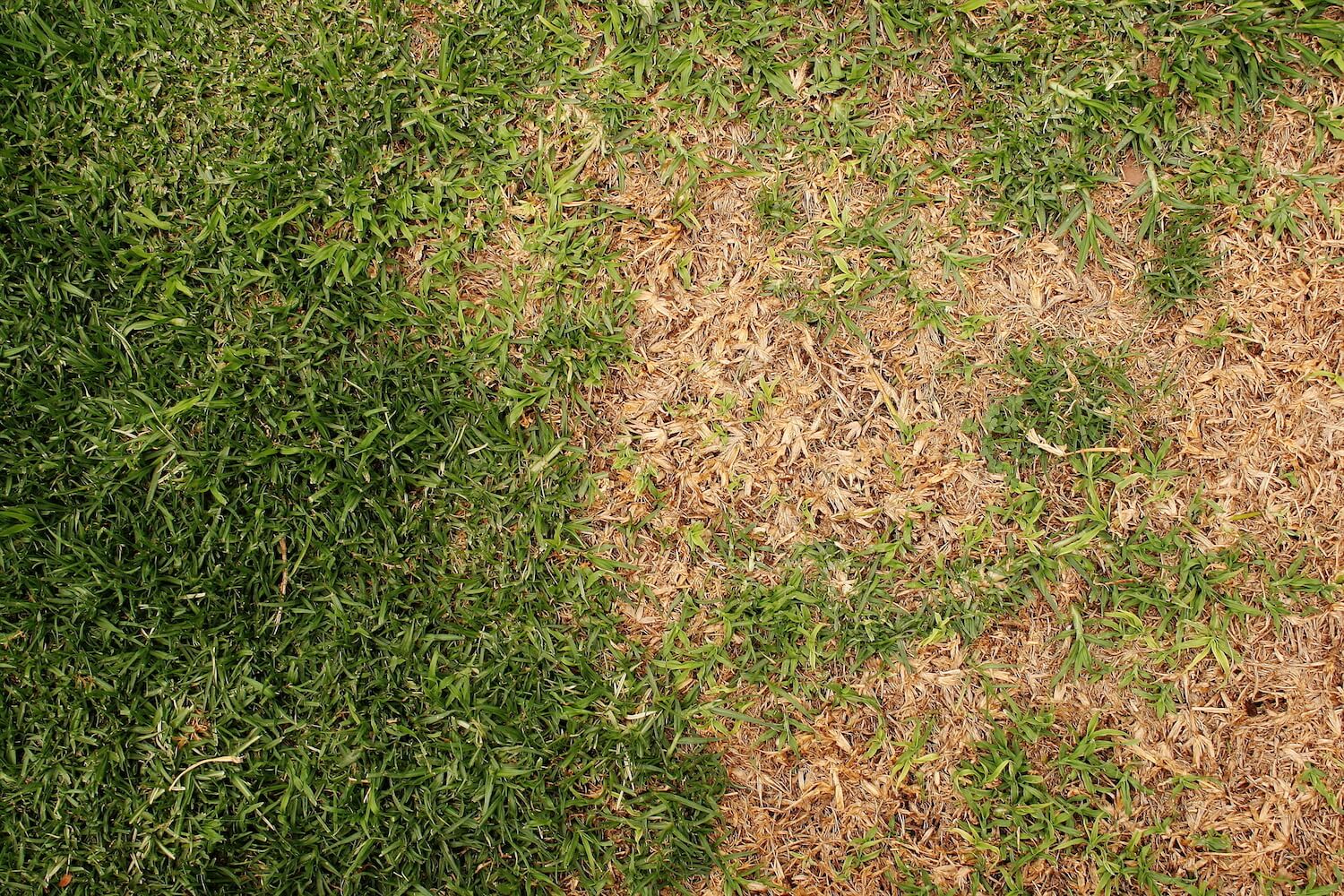
Every year it happens.
Spring arrives and your lawn looks amazing.
Thick.
Green.
Growing fast.
Then summer hits.
Brown patches appear.
Thin spots spread.
Color fades.
You’re watering.
You’re mowing.
So why does your lawn look great in spring but die in summer?
Because spring hides structural weakness.
Summer exposes it.
Here’s what’s really happening.
Spring conditions naturally support grass:
Even lawns with shallow roots or compacted soil can look good temporarily in these conditions.
But that strength is often surface-level.
When heat intensifies, weak foundations collapse.
If soil is compacted, roots stay near the surface.
Shallow roots:
Lawn aeration strengthens root systems before summer arrives.
Without deeper roots, grass can’t tolerate extended heat.
Areas that held water in spring may suffer in summer.
Why?
Because stressed roots from oversaturation can’t handle drought stress later.
If water doesn’t distribute evenly across the lawn, some sections weaken early.
Leveling and correcting grading improves balance and reduces seasonal shock.
A lawn with heavy thatch buildup may look fine in spring.
But when temperatures rise, that barrier:
Removing thatch improves soil contact and strengthens heat tolerance.
Grass cut too short heading into summer:
Maintaining proper mowing height protects the soil and shades roots during extreme heat.
Spring mowing habits impact summer performance.
Many homeowners respond to summer browning by increasing watering.
But if soil is compacted or drainage is uneven, more water may:
The problem isn’t always lack of water.
It’s lack of soil structure.
The strongest summer lawns were prepared earlier.
That preparation often includes:
Summer survival is built months in advance.
It’s rarely fixed during the heat.
Heat reveals weak ones.
Grass that:
Can handle extreme conditions far better.
When the foundation is solid, summer becomes manageable instead of destructive.
If your lawn thrives in spring but declines in summer, the issue isn’t seasonal luck.
It’s structural.
Strengthen the foundation early — and summer won’t feel like a yearly setback.

Want a lawn that survives summer instead of declining every year? Schedule your free consultation and let our team evaluate your soil, drainage, and structure to build a stronger foundation before heat arrives.